To present my birthplace and the landscape of my (first) upbringing, I will borrow the visions and words of Marko Pogačnik. In his book Slovenia Miraculous landscape is interpreted as partly materialized, partly energetically present dimensions, and partly present as networks of consciousness. He compares landscapes to organisms comparable to the human body and its organs and vital centers.
In the case of Slovenia, the Axis of Life’s Abundance (from Ljubljana to the Kolpa), where the creative interaction between the feminine and masculine principles takes place, and is the most important for releasing creative forces and promoting the abundance of life, runs through Dolenjska – a land capable of offering all the conditions for life to flourish.
In addition to the Red Axis, the foundations of the Land of Abundance also include the water framework, which consists of the rivers Krka and Sava. With their two streams, which merge at Brežice, they frame the Land of Abundance, representing the feminine pole of the Red Axis of Slovenian space, which, with its rectilinear orientation, embodies the masculine or fiery part. Thus, the two opposite poles of Gaia’s creation interact: water and fire.
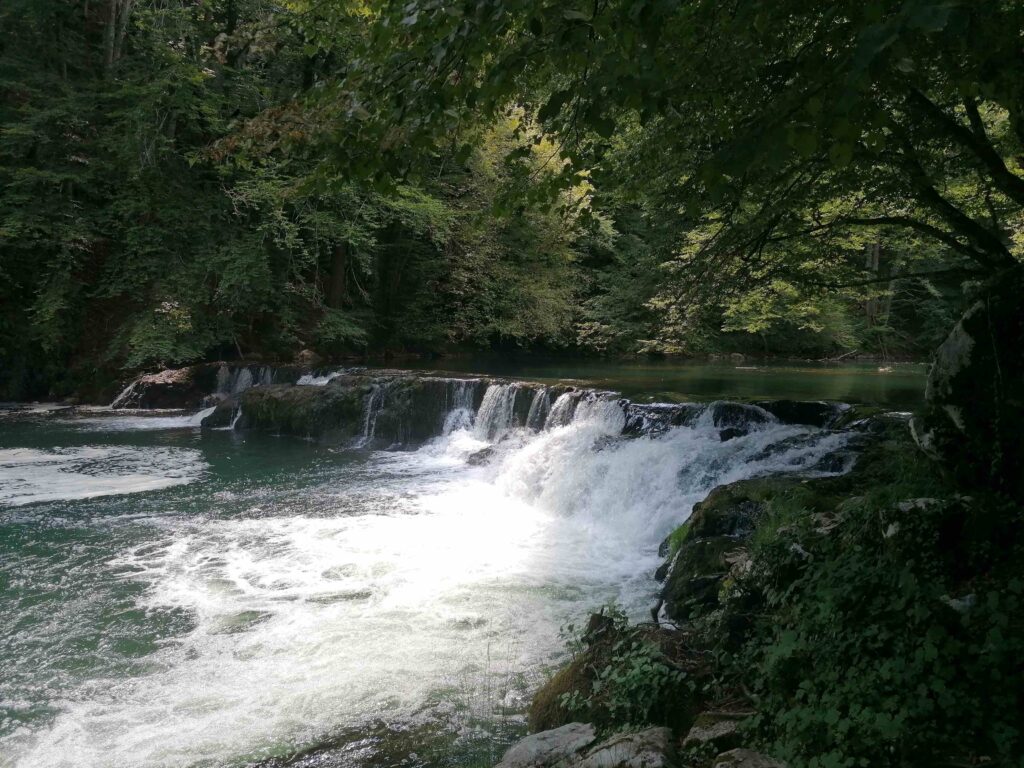
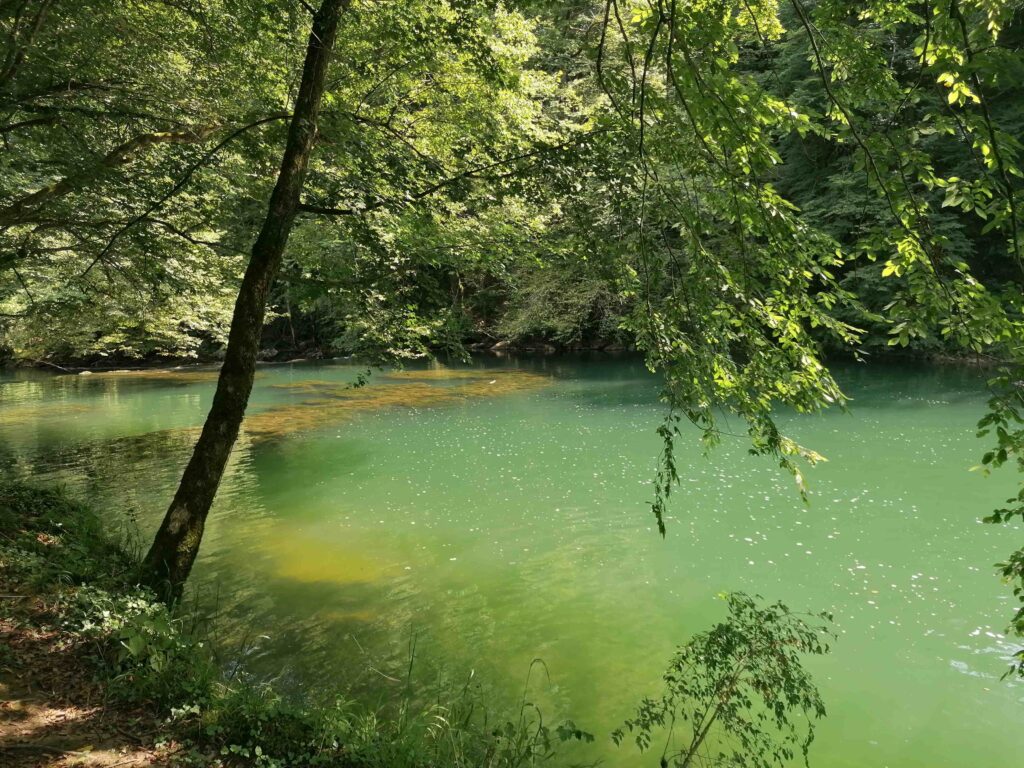
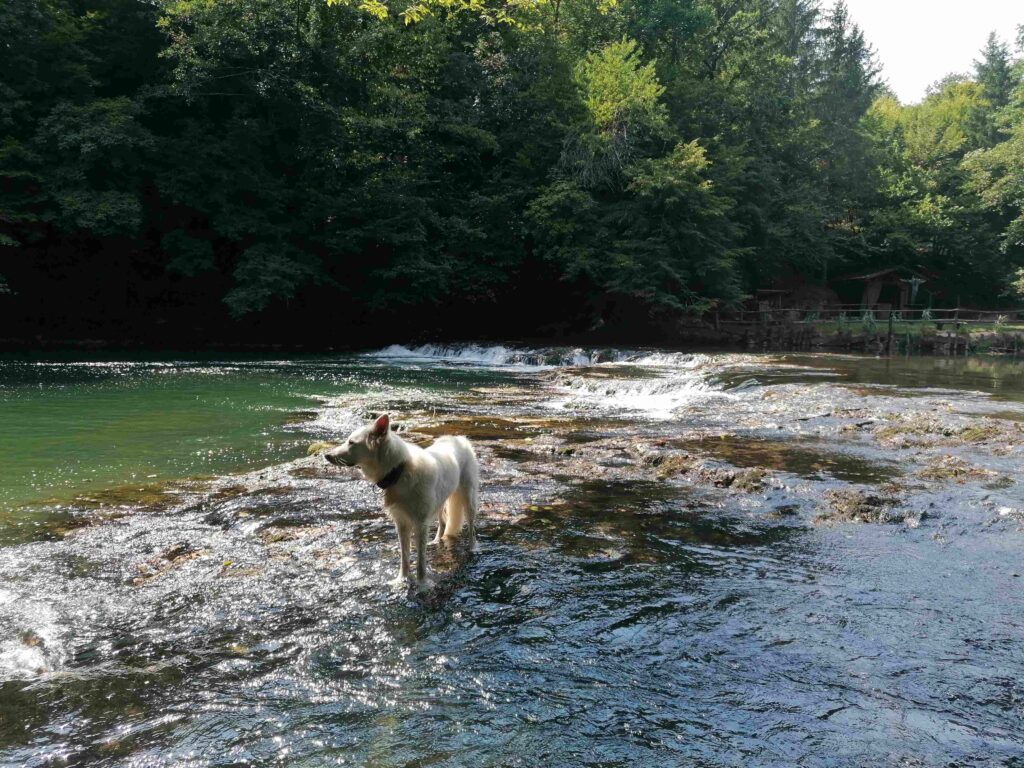
Pogačnik sees the fiery, i.e. male part as a three-sided light pyramid above Trebnje, which connects three worlds: underground, surface, and cosmic; the female half to the light pyramid extends in the shape of a crescent under the Earth and connects Klevevž and Primskovo.
“Novo mesto has a fabulous location. At this place, the river Krka makes a triple bend, similar to the archetypal sign of infinity – a lying eight. In doing so, it winds around three powerful rocky hills, which together form a sacred trinity, the so-called tročan. First, the Krka bypasses the wide Portoval, where the primal forces boil from the Earth and fan out across space. Then it wraps around the high stone pier below Marof. On it, Duke Rudolf IV. founded Novo mesto in 1365. For the third time, the Krka makes a detour around the gentle elevation of Ragov log …”
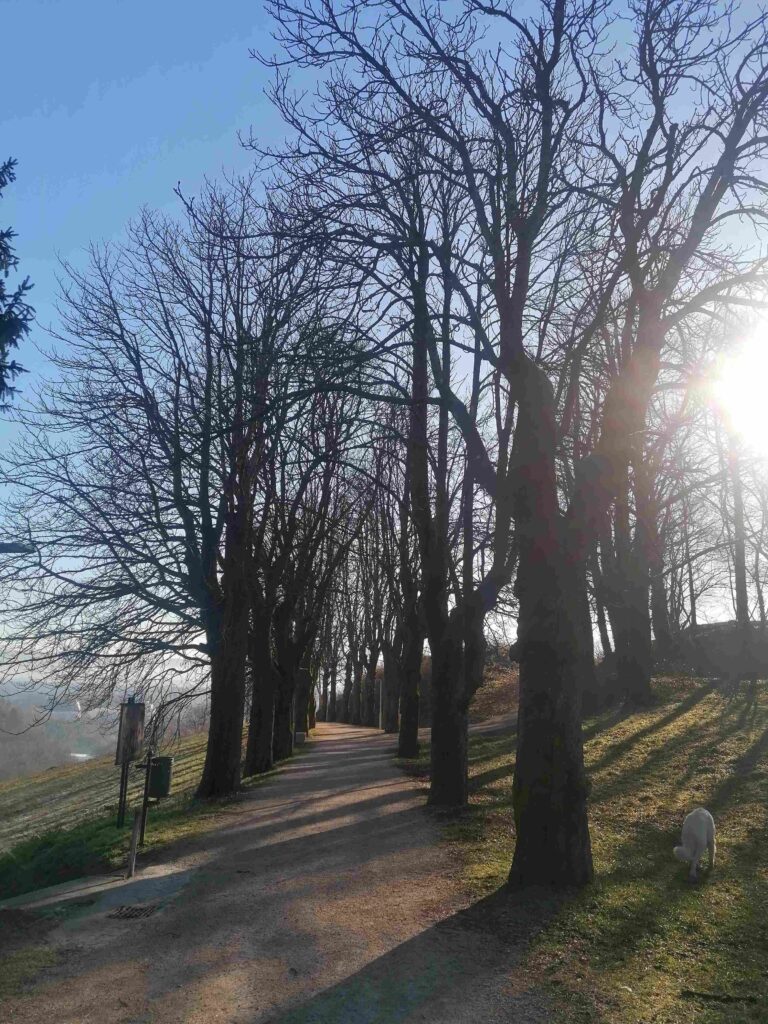
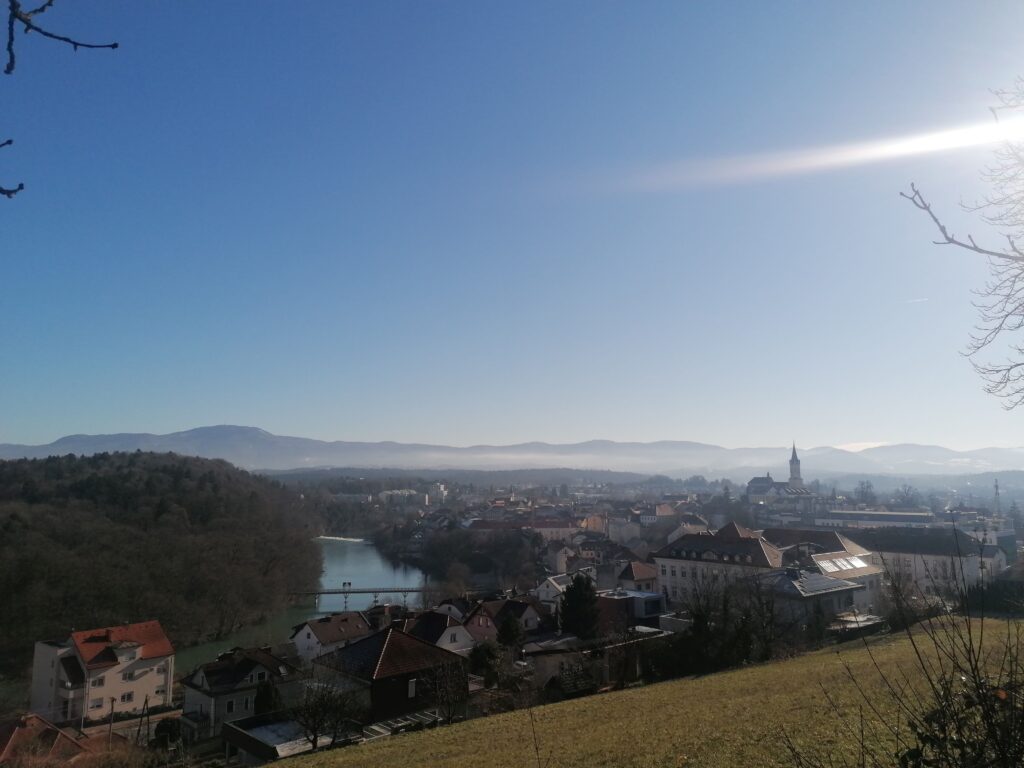
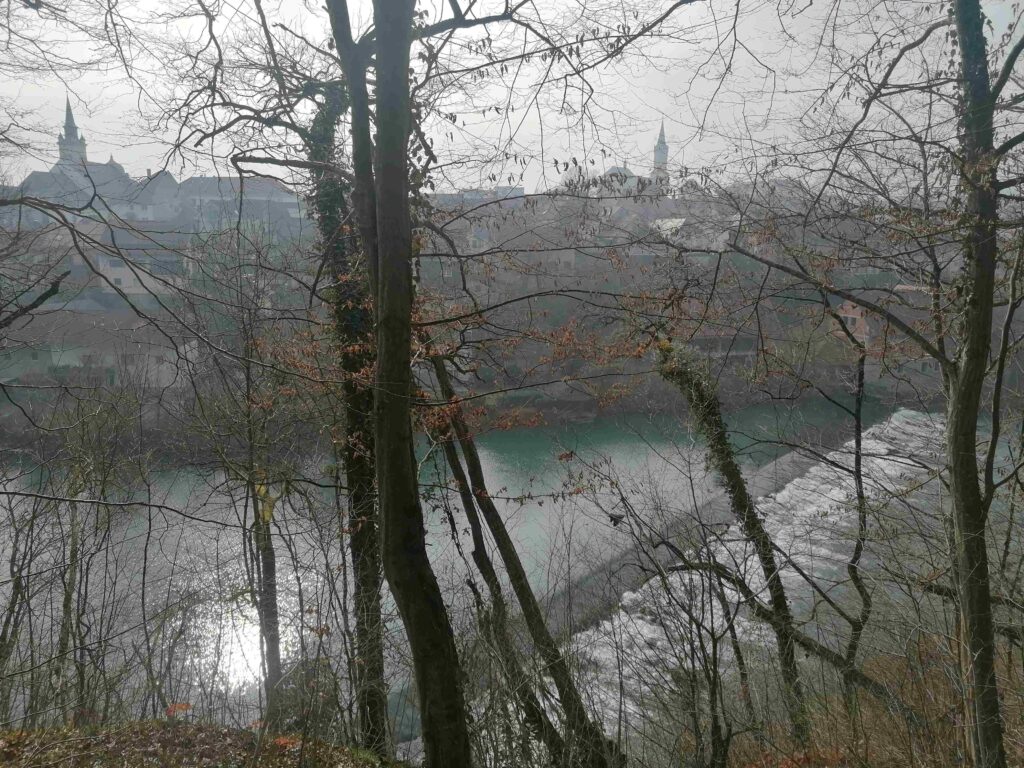
The successor to the pre-Christian holy site is the Franciscan monastery in the city center. Pogačnik believes that the place once acted as an oracle: “I see people who came here to learn the truth about those matters that perhaps tormented them or existed as unknowns in their lives. As a symbol of truth, I see a thin golden isosceles cross above the place. Where the horizontal and vertical intersect, the point of perfect truth shines.”
Novo mesto is actually a very old city. It was a Celtic metropolis, as evidenced by the finds on the Kapitelj fields, but it is even older: “I saw that a vast elven city was spread out above Portoval. The timeless dimension of this ethereal city reaches from time immemorial to the present day. The central Marof is also not inhabited on this level, just as it is not on the embodied level. It appears to me as a kind of acropolis, over which hover, formed in subtle matter, divine beings who embody certain qualities important for the landscape between the Krka and the Gorjanci mountains…“
A brave Celtic warrior appeared to Pogačnik on Marof. He sees courage as the power to speak the truth regardless of adverse or hostile circumstances. He also noticed that, like Rome, Novo mesto is built on seven hills. In the middle rises Kapitelj Hill with the Novo mesto cathedral, around which the other six are arranged in a circle.
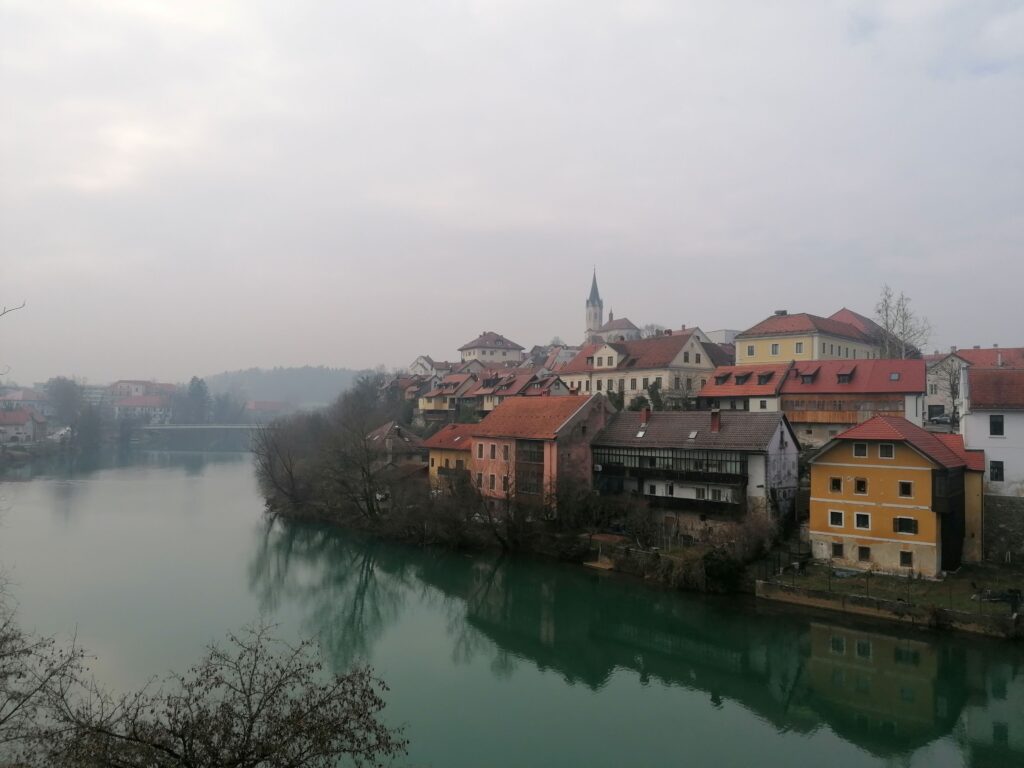
These words reveal only a fraction of the mystery of Novo mesto, my birthplace, you can explore more about it in Pogačnik’s book… While explaining the Dolenjska mandorla, he also ventured to my very beloved place – Otočec. Partly medieval, partly Renaissance castle, a popular wedding venue, stands on a small island in the middle of the Krka River, surrounded on both sides by a park. It is teeming with the elemental creatures of the Krka River, which we can feel and also greet.
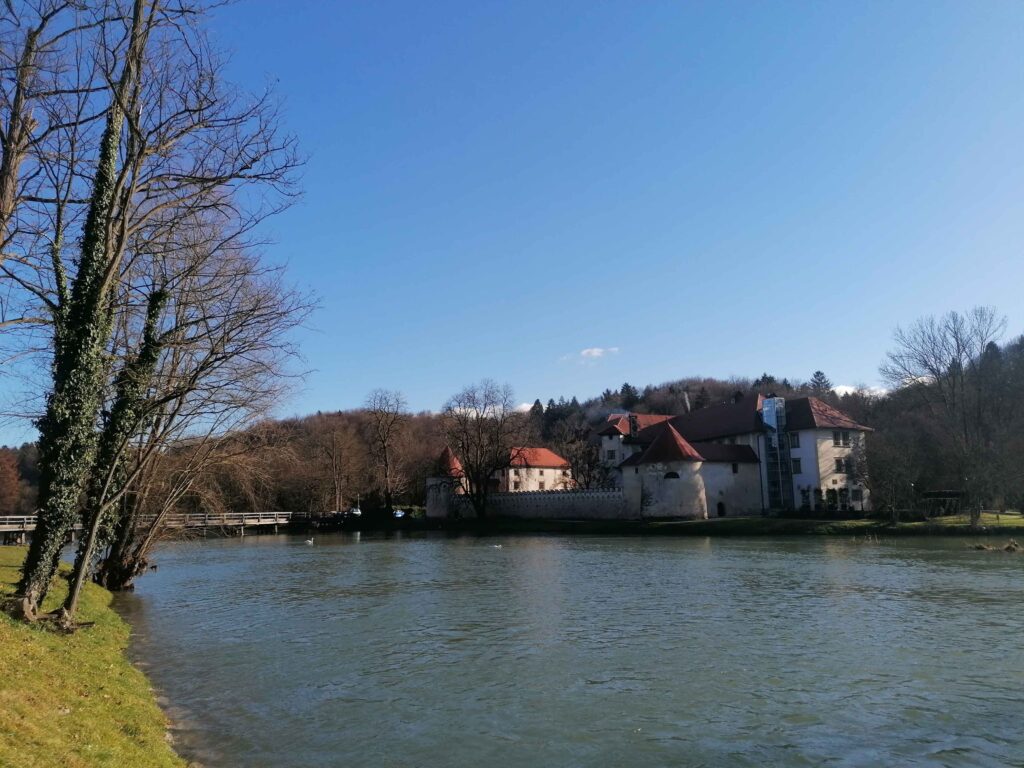
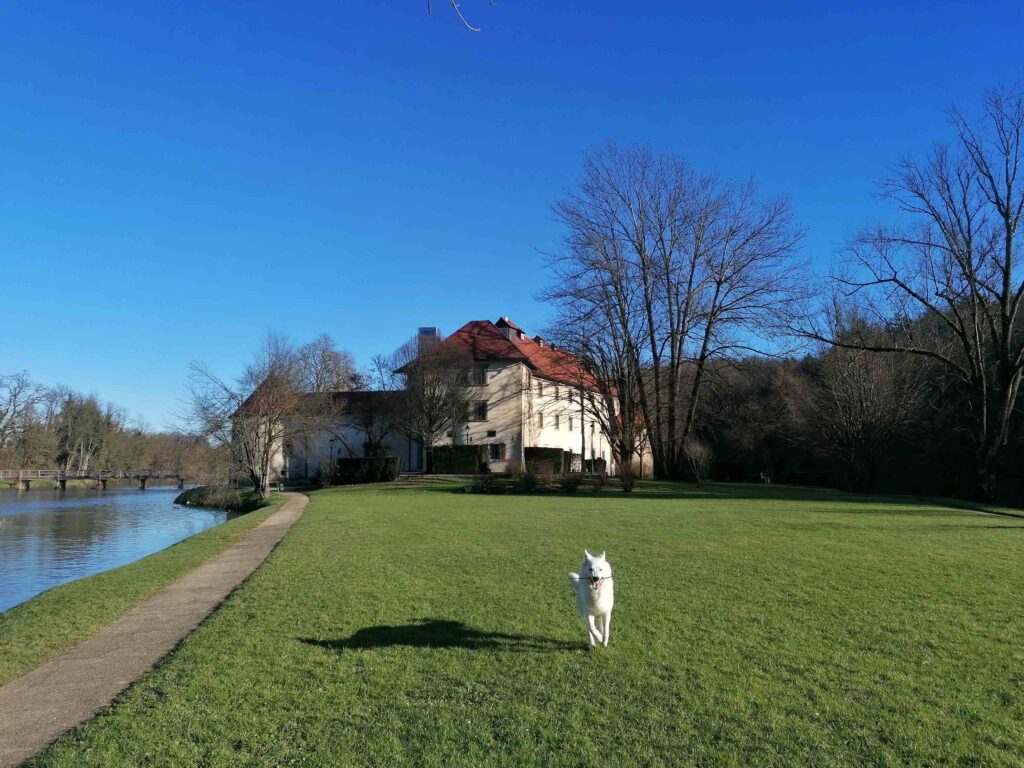
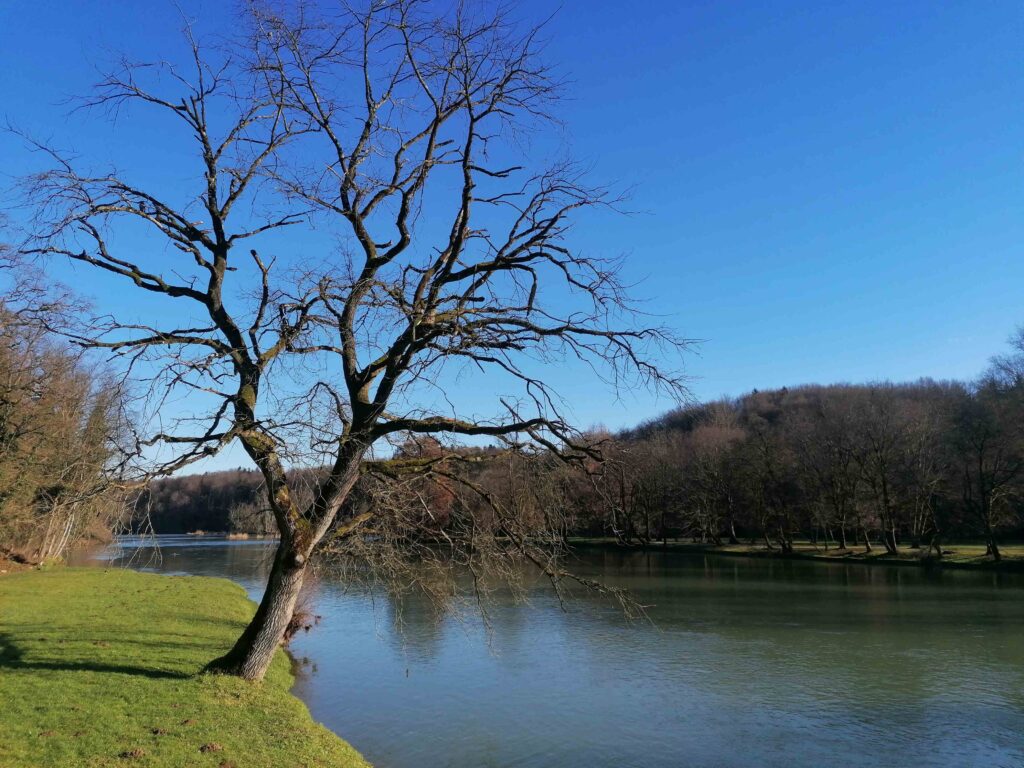
We can also notice the unusual shapes of the trees, which reminded Pogačnik of the Krka’s ability to open multidimensional doors: “I experience them in such a way that the fairy creatures of the Krka lift me one floor higher than the embodied landscape. I became aware of two things. Firstly, I see that the Krka valley in this part of Dolenjska is shaped like the figure I noticed during the ‘dolphin’s jump’, namely in the shape of a mandorla. By the term mandorla I mean the landscape sanctuaries of Gaia, dedicated to the creative processes in the constant creation and renewal of the Earth. Secondly, I became aware that the Krka mandorla maintains another floor above the well-known picturesque landscape of Dolenjska. It is woven from fine colorful light membranes, raised above the level of the actual landscape, so that we usually do not notice it. They are maintained by a high-ranking fairy people, distributed along the course of the Krka between Novo mesto and Brežice…“
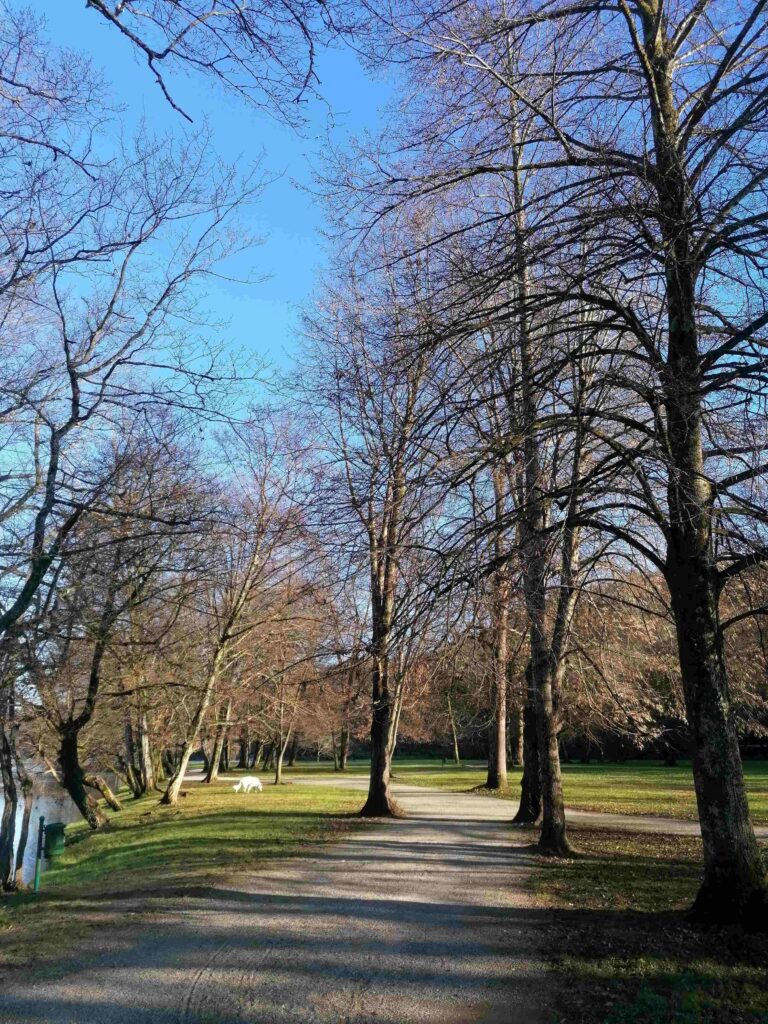
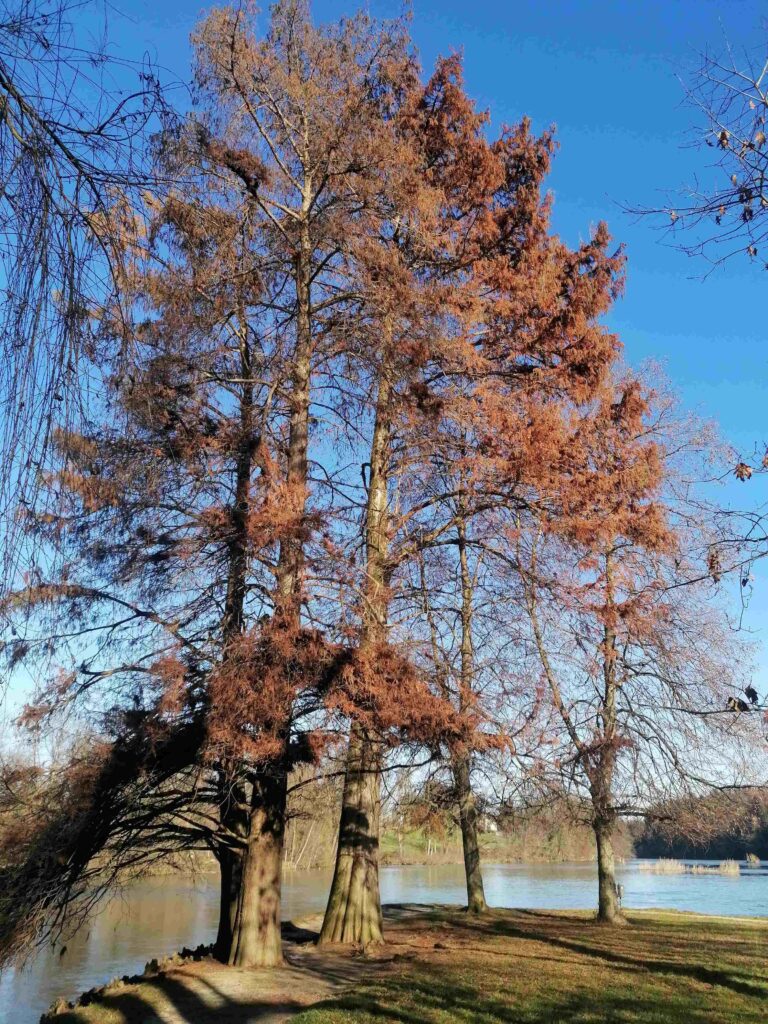
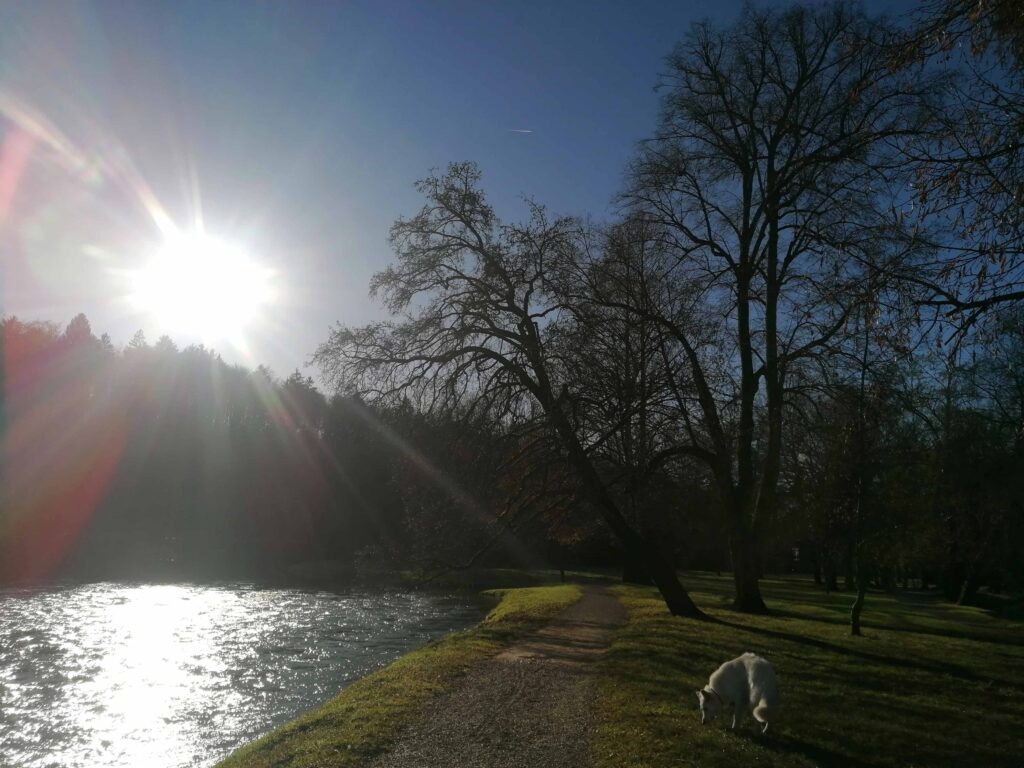
“I’m going home to Novo mesto,” says a popular song by the local band from the 70s, Rudolfovo, but I admit that returning after 14 years of living on the Coast was not easy (or completely voluntary). 🙂 Maybe I was born and raised in these places like Barbara, but Oneya was only able to be born in Ljubljana and then moved to Slovenian Istria a few months later. I see a lot of changes, a whole bunch of new shopping centers, a few new bridges, well-maintained footpaths …
I was greeted by a full moon and a few patches of snow, the next day with a beautiful sunrise over the Gorjanci Mountains and an afternoon walk around Marof (even before I read Pogačnik’s findings), a good week later the first snowy Christmas after my departure came, in Kočevje I also found a New Year’s snowy fairy tale in the house filled with puppies… I only hope that the members of the human race living in this area will be kinder, and more hospitable to me and my dog as they were in the past…