How the Vilenica Cave Was Formed?
The story of how the Vilenica Cave was created tells about a girl who herded cattle. During the day, she liked to sit in the shade, where she was often tempted to sleep. At night, she looked after her younger brother. Because she was not careful, the cattle escaped from her many times. One day, while looking for cows, she saw a large cave in front of her. She stepped closer, attracted by the bright light and beautiful music. She came to the cave and saw young women dressed only in lace, dancing in a circle. The girl was amazed and surprised. The most beautiful young woman approached the girl and promised her that any three wishes she made would come true. The girl’s only wish was to find out who these young women were and where they came from. She was told that they were fairies who foretold the birth of newborns. They ordered her to announce to the people that this cave was called Vilenica.

The cave’s website upgrade the fairy-tale interpretation with historical information about the cave, which was visited already in the early prehistoric period. This is evidenced by the Copper Age ceramic finds, but its purpose during this period is not entirely clear.
The first tourist cave in the world was visited by visitors in 1633 and until the mid-19th century it was considered the most beautiful and most visited cave in the native Karst. However, due to the direct railway connection to Postojna and the discoveries in the Postojna Cave, Vilenica began to sink into oblivion.
It was only when the Sežana Caving Association took over its care, whose members spent thousands of hours of volunteer work in the cave and its surroundings, replacing and repairing the stairs, arranging the cave path and securing it, that it was reopened to visitors in 1963.
Since 1986, the cave has hosted the Vilenica International Literary Award, which is awarded by the Slovenian Writers’ Association to an author from Central Europe for achievements in the field of literary creation.
The members of the association have also arranged a space in front of the cave, where there is a cavers’ lodge with a display of paintings, interesting facts from the cave, and old-time cave equipment.

A medicine that comes from the underground
First I was attracted by the sculptures by Marko Pogačnik in front of the entrance. He placed here stones from the Lipica quarry, on which are carved cosmograms and kinesiograms, representing the connection of man with the underworld. The Dragon Line (a positive energy line) also runs past the cave.
Pogačnik in his book Miraculous Slovenia claims that there are numerous sinkholes in Lipica, whose healing power does not come from the sky, but from the underworld:
“Fairytale tradition understands Vilenica as the home of the fairy people. Thus, we come to know the underworld of Lipica as the home of highly developed elemental beings, which we call fairy. Fairy beings are the daughters and sons of Gaia, dedicated to embodying individual qualities of the soul of the Earth on the surface, in the atmosphere and in the underworld of the planetary body. Lipica is a place where, given the power of the energy vortex and the presence of white (winged) horses, beings of the fairy world are particularly intensely present – unfortunately today mainly in the underworld.
Individual sinkholes in this area can be felt as containers of those qualities that fairy beings protect, ready to share them with the human race, if only they would listen to their presence and accept the gifts of Nikrmana, the Mother of Life.” (p. 100)

I first visited Vilenica as a student during a school trip, and after decades of absence, I took my Ukrainian-Russian participant of Slovenian language course to this area as a teacher during our professional excursion. After a natural science route and ethnological walk through the Škocjan Caves Park and reading the Bible in the Mary of Lurch Valley, we read the Slovenian folk tale The Valley of Snakes above the cave. During the week it is closed for individual visitors.

Since I was translating almost every third sentence from archaic Slovenian into modern, here – above the cave, on Dragon line, among Pogačnik’s sculptures and in the shade of the trees – the idea was born to translate even more fairy tales into modern Slovenian and present them to my students. An idea that grew during Slovenian lessons with a nurse from Serbia on the beach of Debeli rtič into the idea of a booklet with translations of three Slovenian folk tales into Serbian, Ukrainian and Russian. Its purpose: at least in this book, languages - as expressions of the human interior – should carry the energy of harmony, equality and equivalence, as well as the insight that we are all part of the same content, even though each on their own part of the page.

The idea was also adopted by an Albanian-speaking Slovenian language student from Macedonia, who translated the fairy tales into Albanian as a gift for her grandchildren. Later, a Malaysian woman, who was brought to Slovenia by love from the eastern side of the Earth, joined the ‘fairy tale movement’ 🙂 and translated them into English. A Colombian woman who married and immigrated to Slovenia from the western side of the Earth has taken the initiative to ensure that they will soon be available in Spanish as well.
A Serbian translator and I (after her having already passed the Slovenian exam at level B2, which proved how far you can get with this language in a year and a half) also went inside of Vilenica. We were fascinated by the many stalactites, stalagmites, and the atmosphere in the cave…
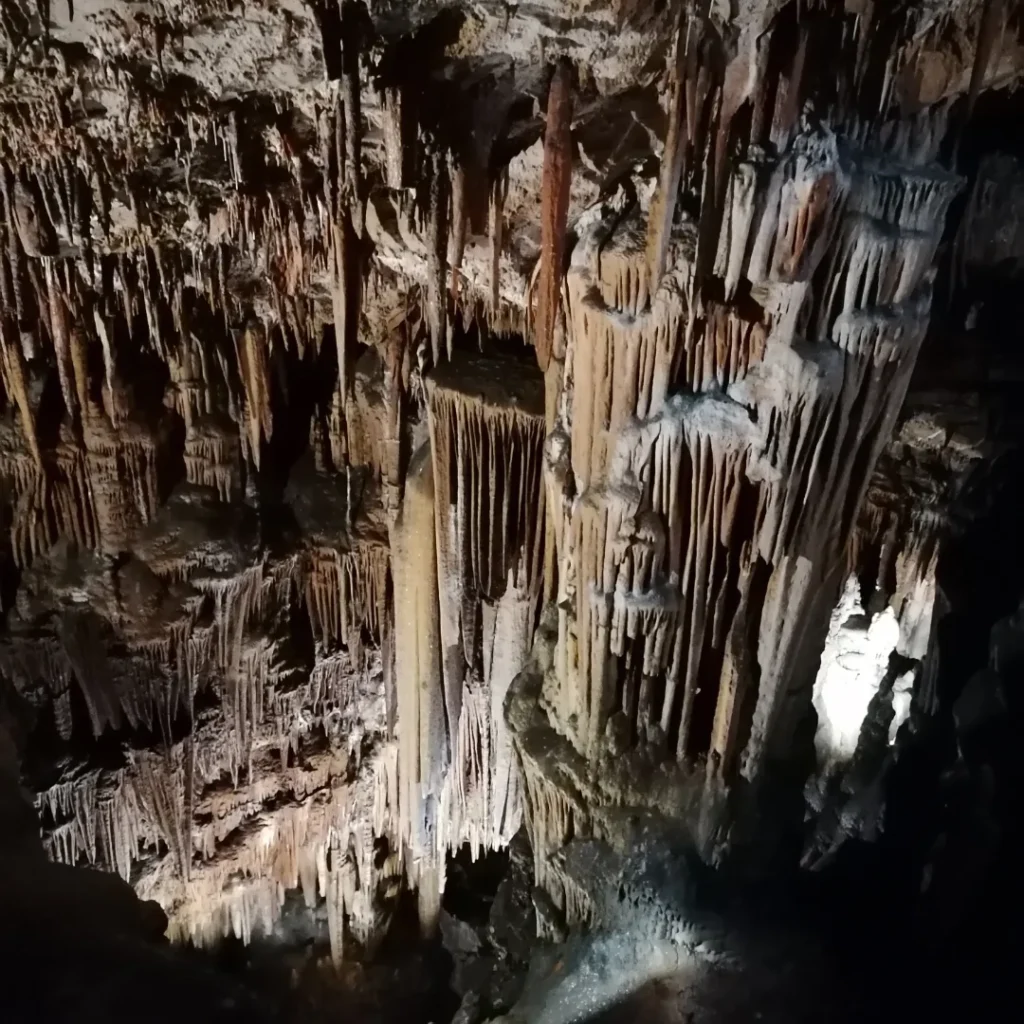
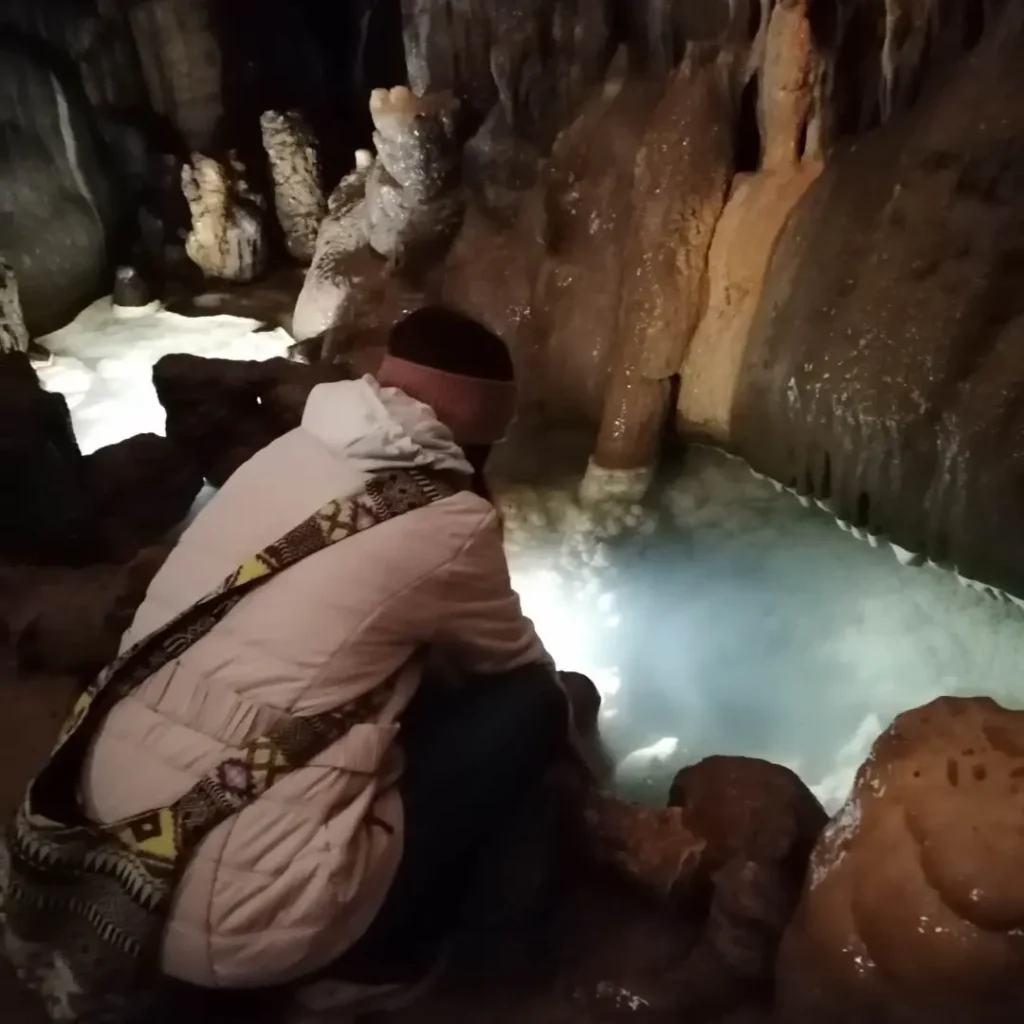
We went to the cave on Sunday afternoon, having been warned about the massive rescue of an injured caver which was taking place near Cerknica at the time. While exploring a new cave, a falling rock pierced her helmet and seriously damaged her. More than 100 rescuers and members of various services participated in the rescue.
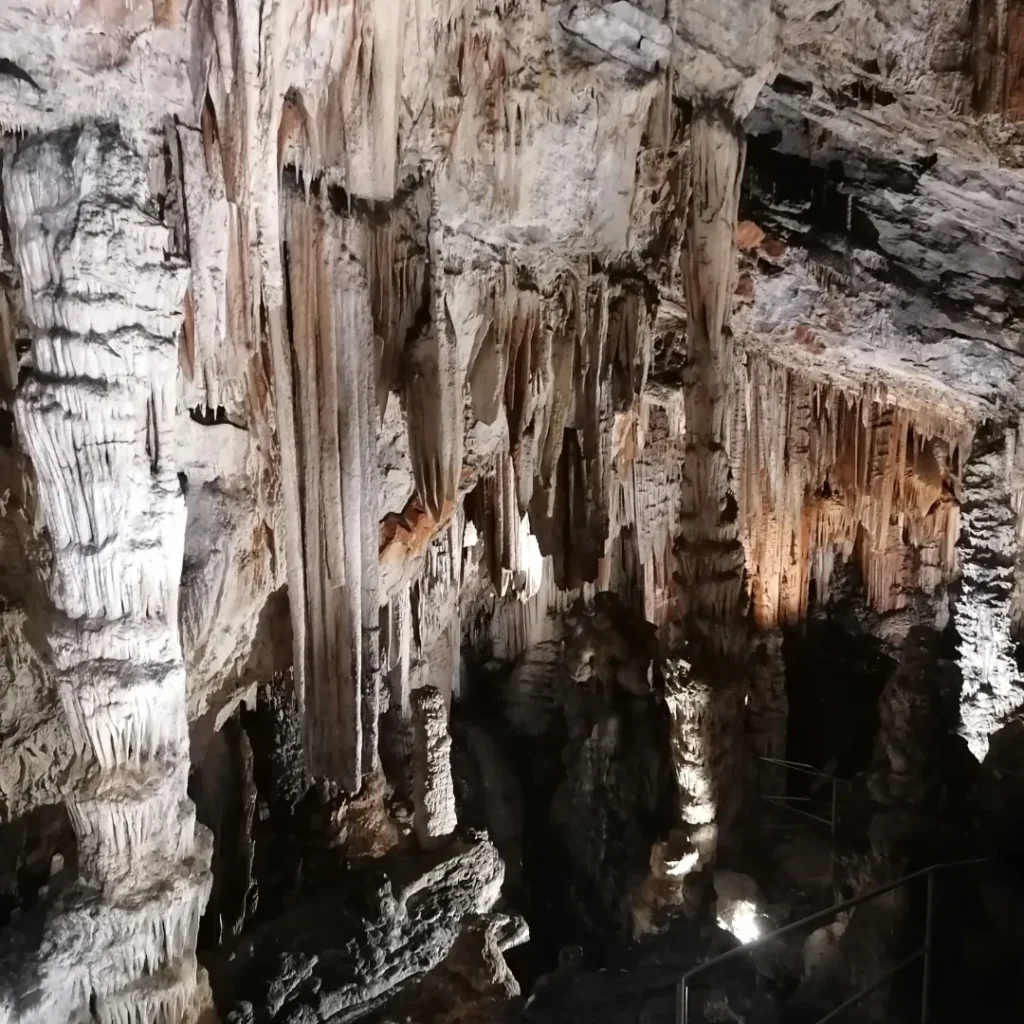


It was probably no coincidence that we stepped into the depths of a cave during this big rescue. I (slightly cold) was not afraid of a possible blow, and instead of fear, I entered the cave with respect, trust, admiration, curiosity, and love. But I admit the thought that a close encounter with a stalactite that would enlighten the young Dolenjec – who expressed a desire to saw off a few stalactites, make something out of them, and then sell this product – would not harm his ‘entrepreneurial’ mind. Destroying and exploiting natural wonders for consumer-profit purposes is not part of the future. But we clearly have a lot of help and all the necessary support to make heaven on earth happen…