Tara and I spent Halloween in the village of Crni Lug. After all the apartments and hotels with a view of the sea, the last night took place in the vast forests of Gorski Kotar, in the Risnjak National Park, in a small room, under wooden beams … And I have to admit that here I’ve slept the best on our jurney.
“It doesn’t take very far from Rijeka, only 15 kilometers, to step into a completely different world, a world of beauty and peace. This is where the Pannonian and Peri-Pannonian world is closest to the Adriatic, and the watershed of the Adriatic and Black Sea estuaries is closest to the Adriatic coast. In other words, a drop of rain that falls on Risnjak will end up in the Kolpa, Sava, or Danube, and finally in the Black Sea, thousands of kilometers away, after an exciting journey through the rocks, even though Risnjak is only 15 kilometers away from the nearby Adriatic Sea… Here nature itself is its own master, life is self-sufficient. That is why Risnjak is extremely valuable for researchers – here they can study life without human influences …” it is said on the website pag.si
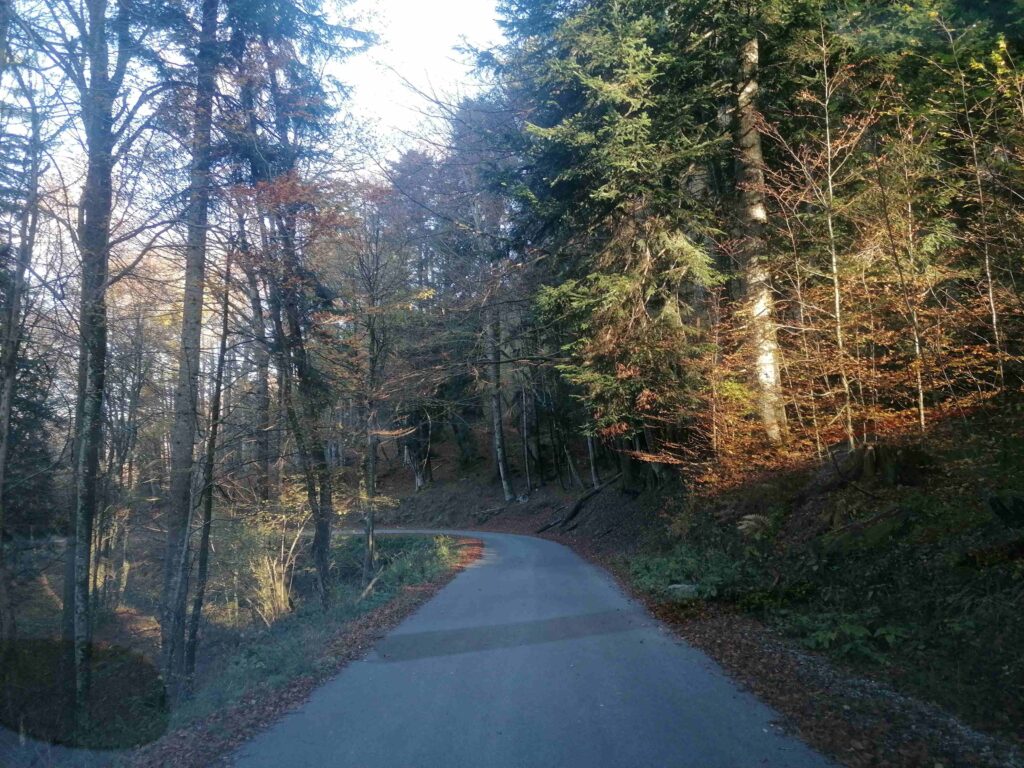
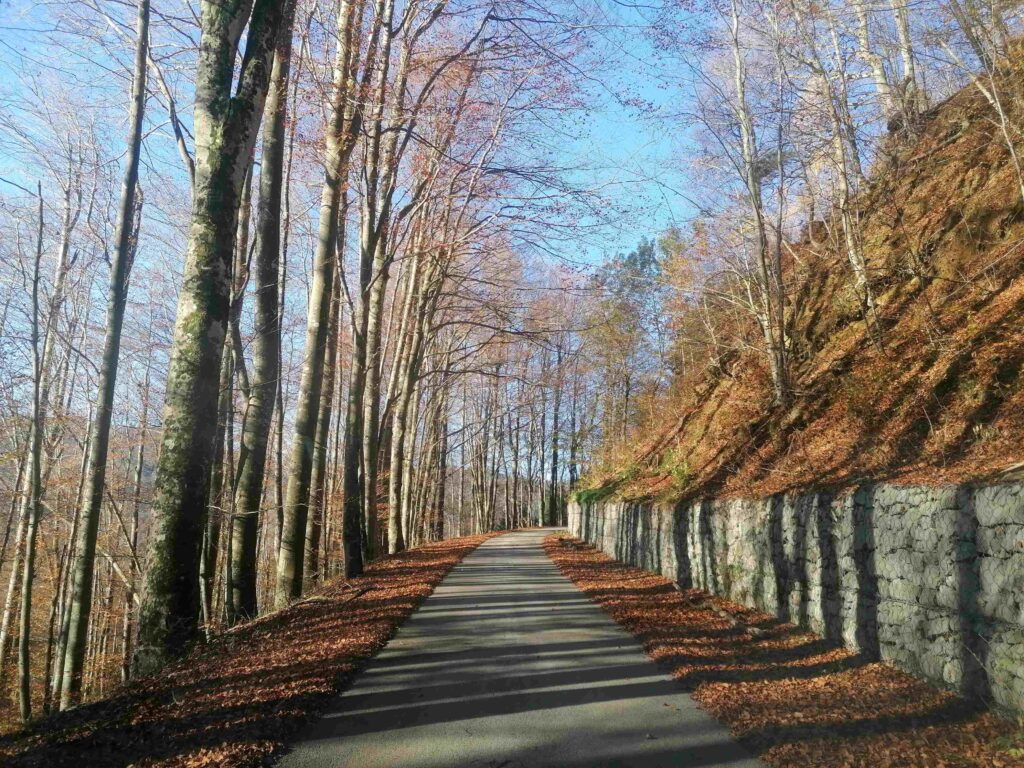
The next morning, early in the morning, we went to the source of the Kolpa River – along a shorter trail, from the village of Razloge – the longer, slower, and easier path had been closed for a long time due to a collapsed bridge. Because we were so early, the entry point was still closed and we didn’t pay the entrance fee.
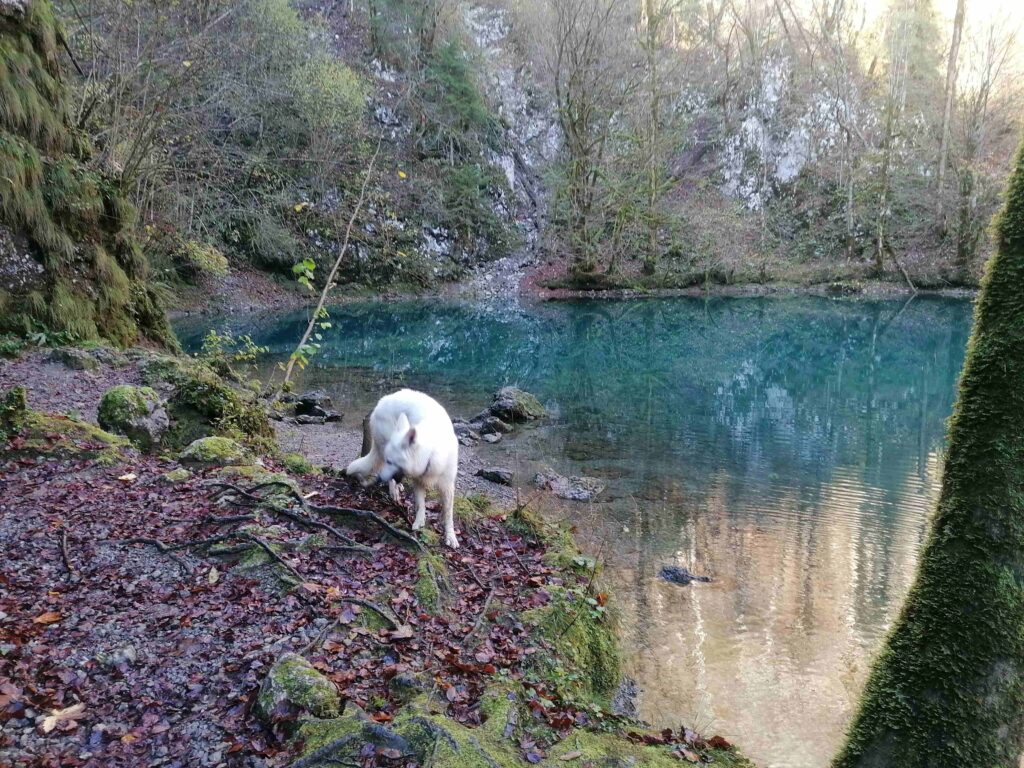
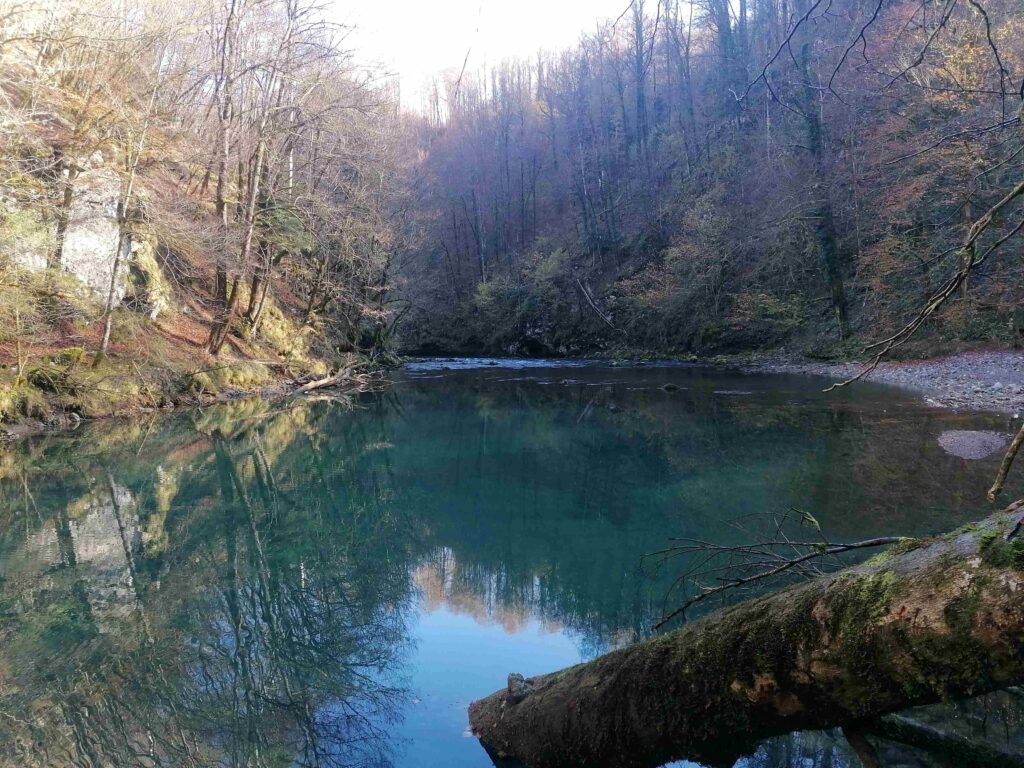
The spring and its surroundings have been protected since 1963. The very bottom of the spring, which is considered one of the deepest, strongest and largest springs in Croatia, has not yet been fully explored – the deepest dive reached a depth of 154 meters, and the temperature in the almost 50-meter-wide turquoise lake under the steep rock is only 7 degrees.

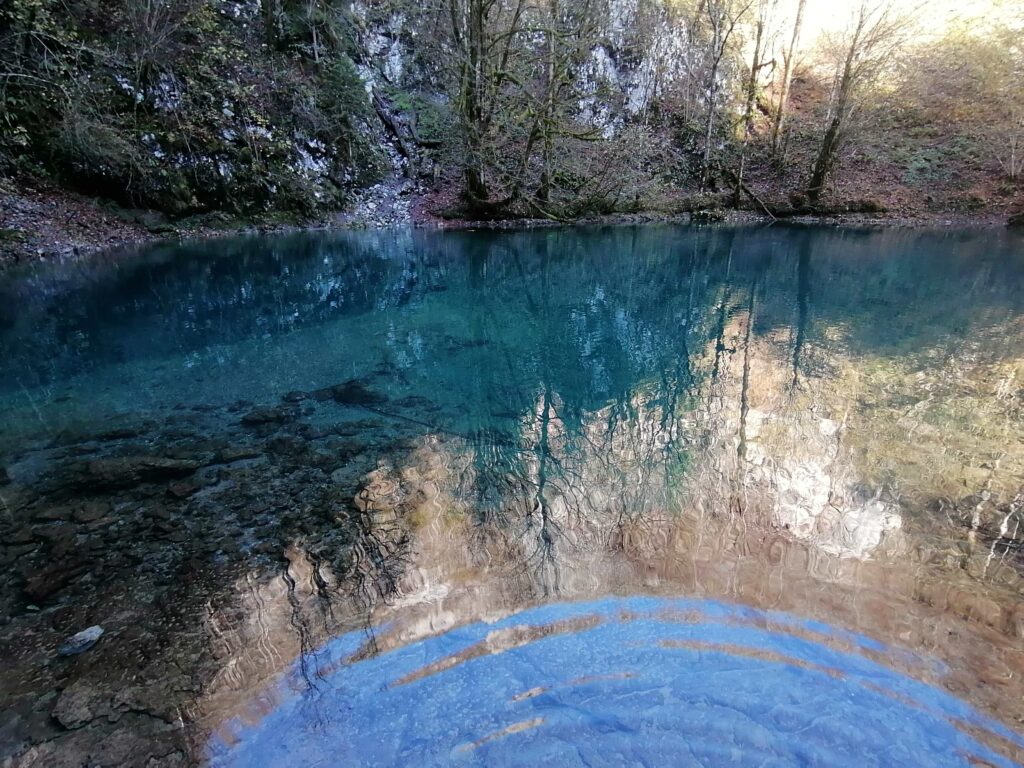
This didn’t stop Tara from wanting to swim into it, but I prevented her from doing so, so she turned her attention to the branches, and I kept an eye for any elemental beings present.
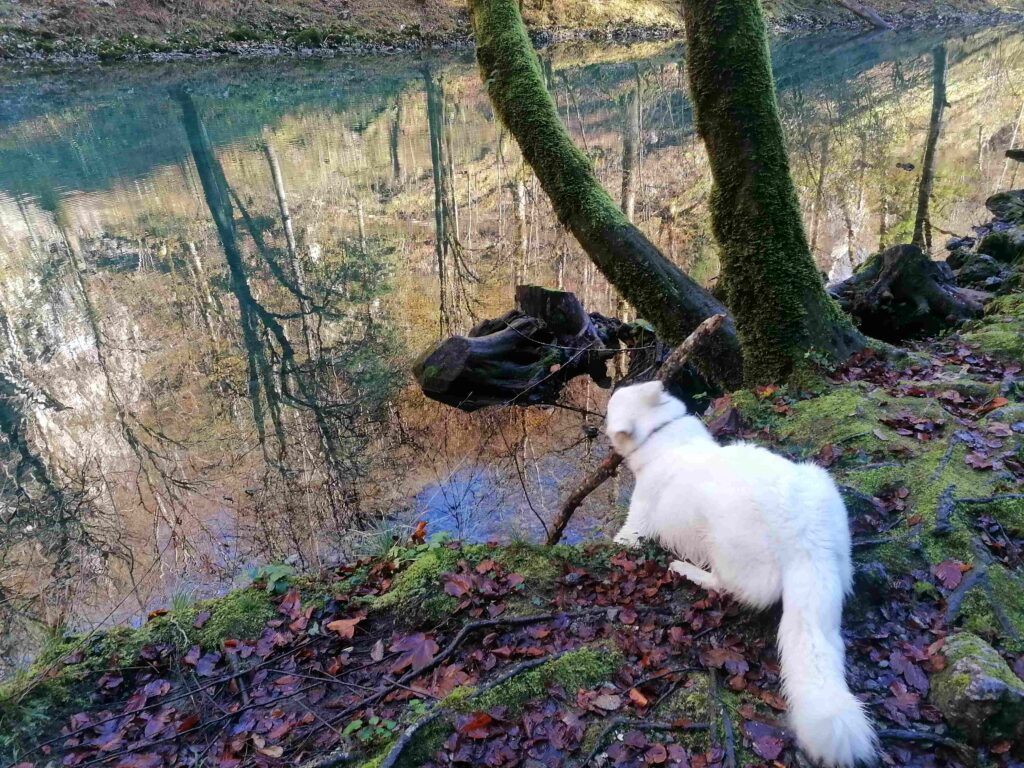
This 296-kilometer-long miraculous river is not only home to many animals and plants, but also the natural habitat of many mythical creatures. “According to one of the tales, fairies bathed and danced at the very spring. Of course, people wanted to see them, but the most curious were father and son who climbed to the very top of Uobrska Stena above the spring. They crane so much that they fell off the wall. Two deep abysses formed in the ground, from which water from the underground is still boiling today. And the fairies have left these places because of their presumptuousnes …” says the text in the book Fairytale Trails without Borders, by Irena Cerar.
The book announces Kolpa as an “emerald fairy home” and also mentions “dwarves” who had red caps and green panties, or whistles that they whistled at. They grazed fish in the Kolpa, annoyed fishermen, lumberjacks, drivers, and scared young and old.
A special feature of these places is the ‘Darkling’, a fabulous creature tied to the forests, which people feared. He is described as a very large, black man with a wide hat on his head, so large that he could see across the houses. He scared older boys who stayed up late or kids who came home late … Also the witches were scary; they could be seen as lights flying over the Kolpa. Over the village of Turks on the hill of the Little Guard, they supposedly had their own dance floor…” (Irena Cerar: Fairytale Trails without Borders, Source of the Kolpa, 240-241)
Pogačnik also writes about the primordial world of the Kolpa in his book Slovenia Miraculous: “Covered by the border with Croatia, the Kolpa valley has retained its power as a ‘kundalini’ for the Slovenian area.
By the term kundalini, Indian yoga refers to the stock of ancient powers that a person carries at the base of his body. They are given to us by Gaia, the mother of life, to provide us with the conditions for unlimited growth in the energy and spiritual sense. Usually, the supply of power is frozen behind a person’s back, because we have become accustomed to living life in a minimal way and therefore we do not need the drive of strong creative forces. The Kolpa valley also seems to be a sleeping beauty …
The folk tradition has preserved the memory of the original power of the Kolpa Valley. A folk tale about Peter Klepec, a frail young man from Osilnica, deep in the hinterland of the valley. The weak boy had to endure the mockery and will of the stronger, until he realized his inner strength, uprooted the mighty tree, and swept with it away his opponents.
The myth of Peter Klepec speaks of an unimaginable power slumbering in the human interior, but also warns that the focus of these highly potent forces is in the last Slovenian valley, in the world of the Kolpa …”
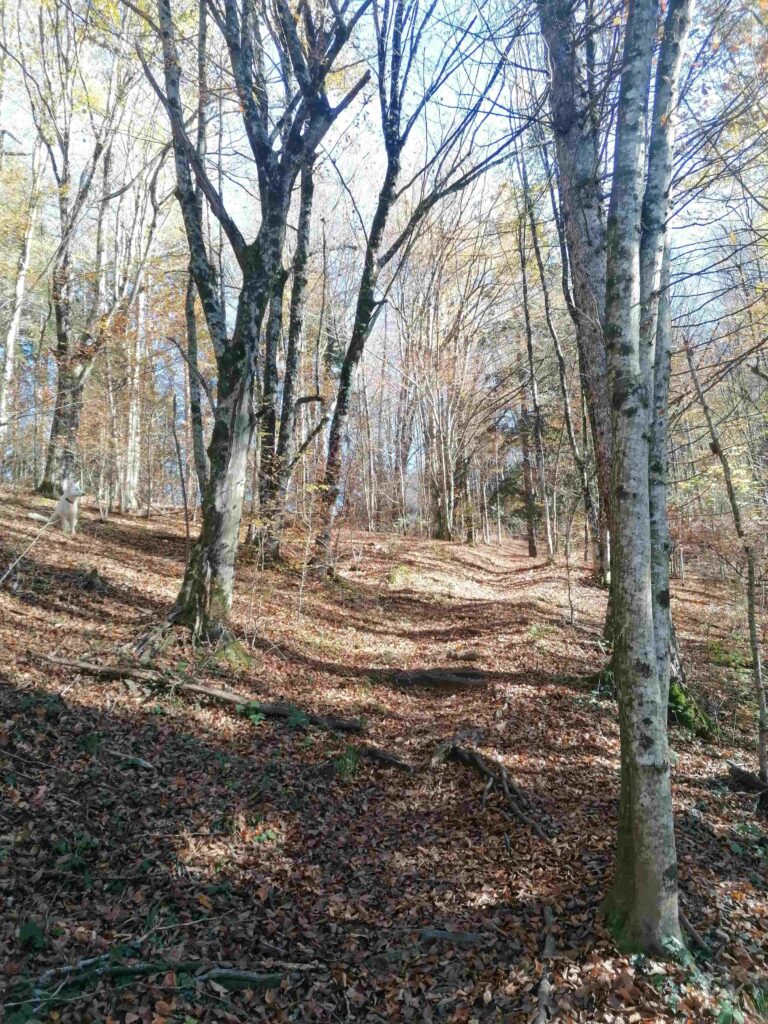
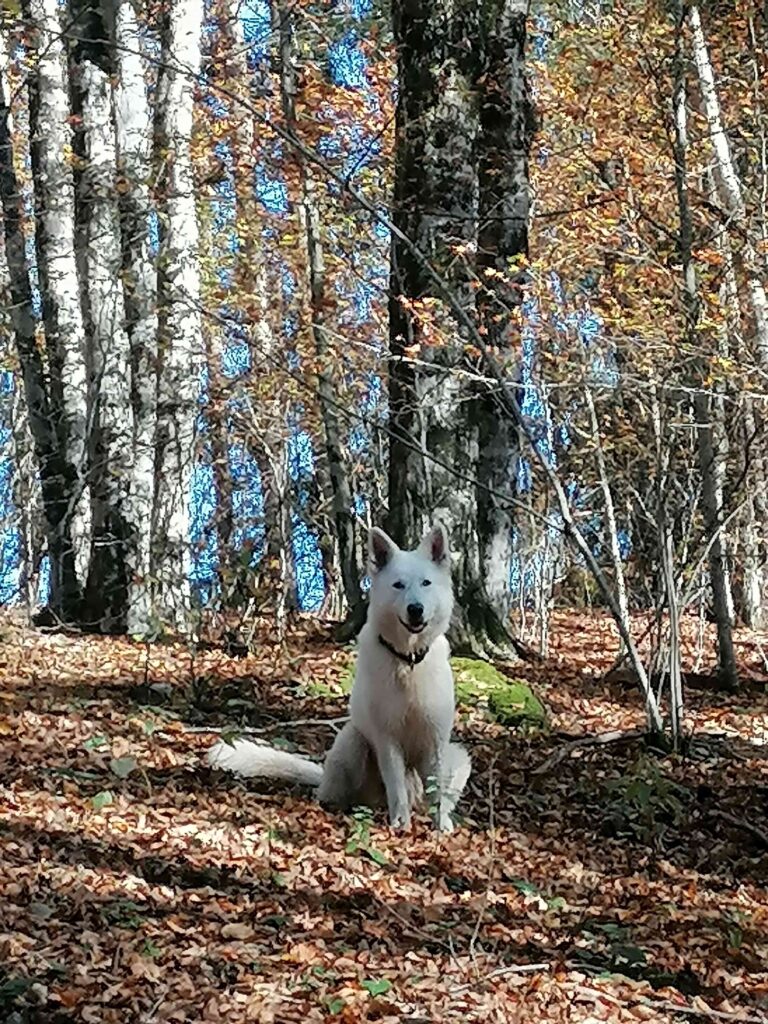
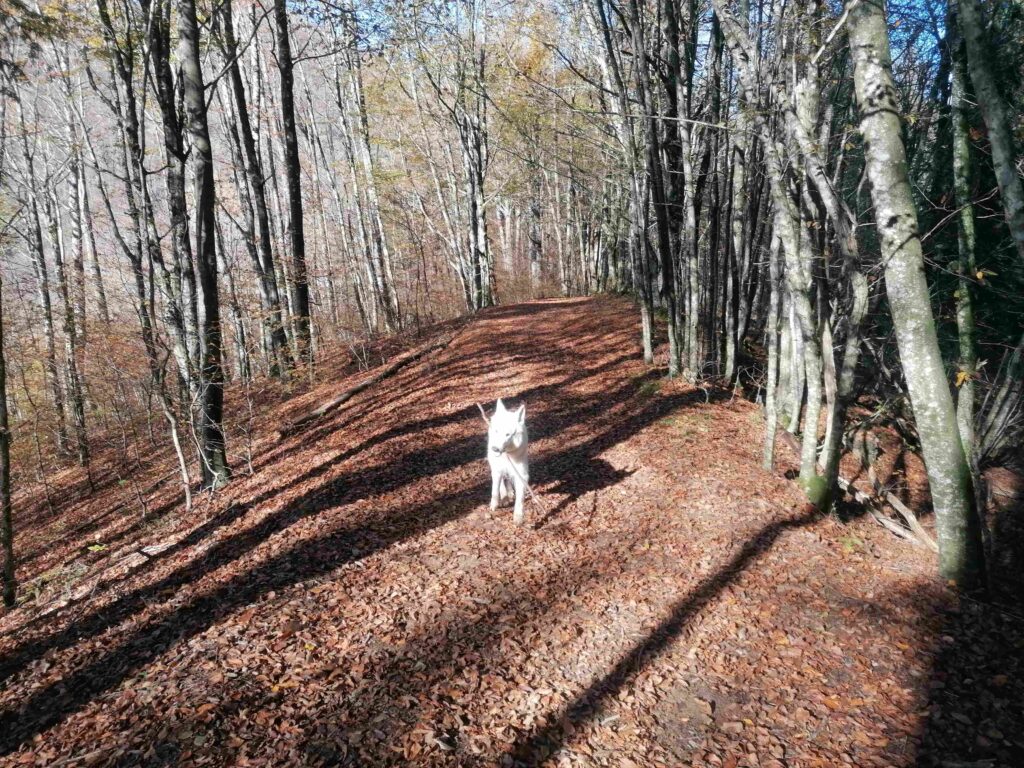
In the afternoon, we drove to Čabar, the last stop before returning to Slovenian Istria. It is probably no coincidence that I visited the birth house of my late grandfather, who moved from there to Dolenjska in Slovenia, for the first time on that day, although I did not plan to do so – on a new moon, on the day of remembrance of the dead.
The mythological world of the upper Kolpa and Čabranka is unique, as it is a naturally geographically closed area with a common history. Until the 16th century, the area from Prezid to Osilnica was part of the Kočevje estate, and later owned by the noble families of Zrinjski and Frankopan – until the 17th century it was part of Carniola and inhabited by the Slovenian-speaking population.
The Slovenian origin of the population is indicated by the Slovenian language and surnames typical of the Slovenian area (according to the author of the article), among which I also found my own: https://siol.net/novice/slovenija/starodavna-slovenska-dezela-ki-si-jo-je-prisvojila-hrvaska-450177
By the roadside, I was surprised by the large sign: Welcome to Čabar, the green heart of Croatia. The green heart of Croatia?
“Spruces, firs, beeches, pines, hawthorns, hazelnuts, dogwoods … The homeland of Petar Klepac, the legendary Croatian giant, is one of the most beautiful green gardens in Gorski Kotar. Its green wealth extends over 85% of the area. Thus, the Čabar area is obviously the greenest area in Croatia …
The first traces of life in this area can be found from the time of the Illyrian-Celtic tribes of the Lapods, from the time of the Hallstatt culture from the 9th to the 4th century BC. During the 1st Crusade, the Crusader troops moved through the coastal hinterland and encountered: “Wild people in a wooded and hilly area with little arable land, engaged in cattle breeding on vast pastures, skilled in weapons and robbery, who live in a barbaric manner and speak the Slavic language, unlike those on the coast who speak Latin …”
The town of Čabar was mentioned in 1642, and its founder was Petar Zrinski, the most important Croatian ban. In 1651 he opened a foundry and mint there and built a castle, which still exists today in a slightly modified form …” among other things, claims the publication: http://gorskikotar-croatia.blogspot.com/p/cabar.html
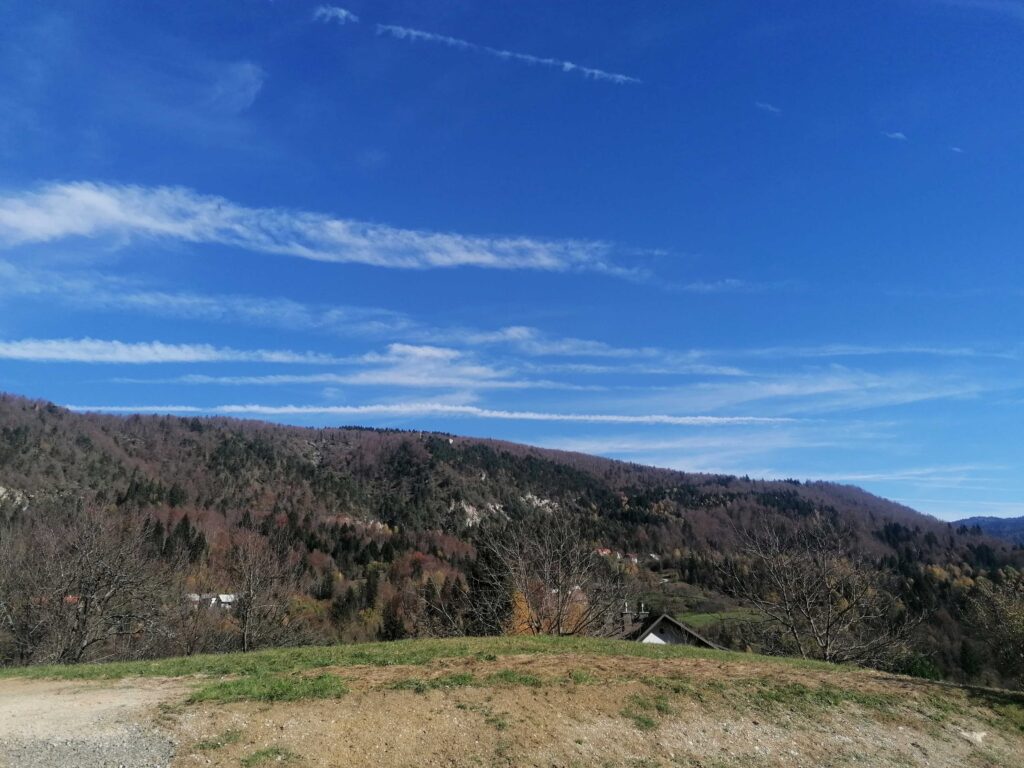
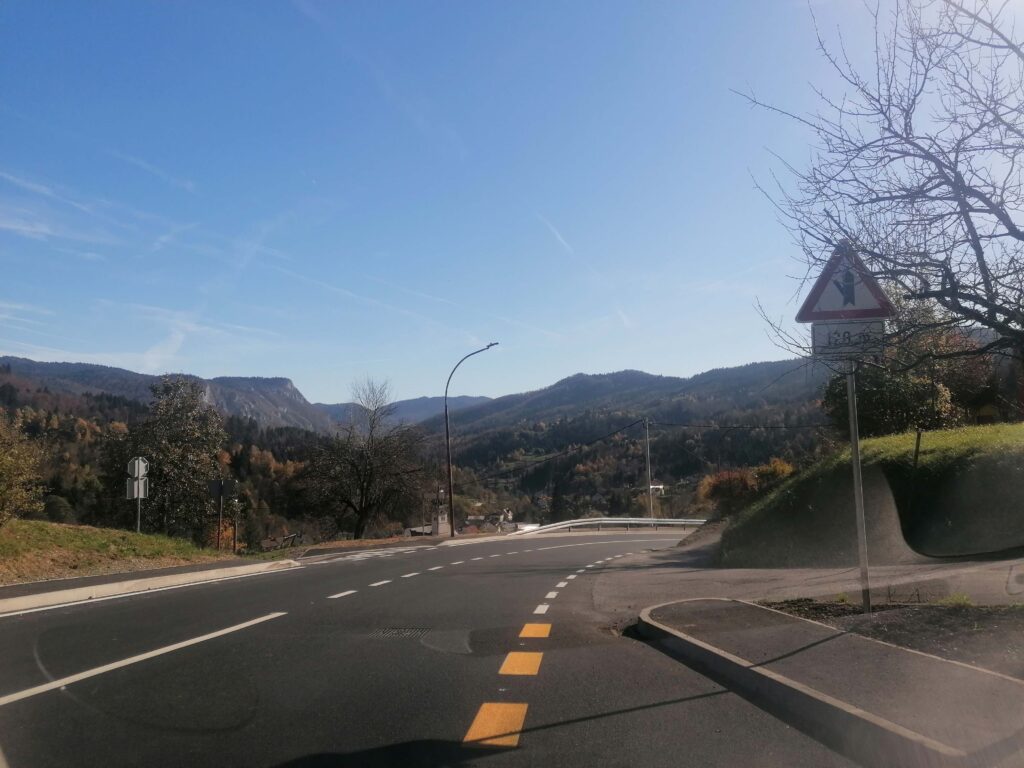
Our ‘oneyatrip’ ended with the first homemade (and most delicious) food after a good two weeks of travel. The neighbors of the abandoned house, who knew my grandfather and great-grandfather, also kindly welcomed Tara and me, and in addition to tasting the past, served me coffee, homemade juice, and homemade pumpkin pie. They have maintained stronger contact with their roots and built a house here – with its own water source and a fence that protects against the ever-present wildlife.
Well, while listening to stories about bear visits and a wild boar that apparently came to ‘rest’ in the yard, but before the arrival of the hunter who would shoot him, wisely walked back into the forest, I was silently cheering for the animals all the time – despite the hospitality (to me as a human) … Will the time soon come for us to understand each other and live together without “protection”, without aggression, without weapons?
During my travels, I have come to the conclusion of my second novel, entitled From Peasant to Queen, and in addition to many other insights that I have not written about here because they require a broader explanation, I am also wondering about this. Will humans find contact with ourselves, with our roots in the earth and the sky above us? And like the Slovenian-Croatian Peter Klepec sweep away our enemies who live only in ourselves? Will we live in our fullness, in oneness with others, plants, animals, and even invisible beings? Will these be revealed? Showing who and what they really are? Will we notice them, hear them? Respect? Appreciate? Take into account … Love …
While I am writing these last words on 11 January, in a small wood-enclosed cottage, among the vineyards, on the snowy hill in Dolenjska, only in the company of a young dog, where I have spent the last week, separated from almost everyone and everything, dedicated myself to anchoring these experiences and impressions, I admit that tears are running down my cheeks …