Marko Pogačnik in his book Slovenia Miraculous claims that the axis of Slovenian space, dedicated to the abundance of life, has found its perfect expression in the Ljubljana Basin.
“The balance between feminine and masculine forces is perfect in the Ljubljana landscape. It resembles a cross with yin spheres to the north and south and yang ridges to the west and east. In the center of this powerful intersection rises the steep dragon (castle) hill. It represents a powerful focus of the primal forces of Gaja/Nikmana and stands in the heart of space. Its fiery force was balanced by the Ljubljanica River…“
The area was already inhabited in the Neolithic era with pile dwellings around the Barje lake. Janez Jalen, the author of my favorite childhood book, which I suspect had the greatest influence on the course of my life – Beavers, also writes about this period in these parts.
Pogačnik’s first outline of the landscape sanctuary of Slovenia and also Ljubljana was confirmed by the master of the fairy world Christopher Tragius: “He confirmed that in the heart of the Ljubljana landscape cross, a landscape sanctuary dedicated to the three aspects of the Goddess had already been created in the pile-dwelling age. Rožnik and Golovec, which lies opposite it, embodied the places of inhalation and exhalation… A sanctuary was dedicated to the Virgin Goddess on the edge of the then lake, in the area where the Trnovo church stands today, to the Goddess of Abundance in the area of today’s city center at the Three Bridges, and to the Goddess of Transformation on the edge of the Savsko polje, where the cemetery Navje was later located.”
The gradual destruction of the landscape sanctuary was interrupted by Jože Plečnik and his creations. The Trnovo Bridge stands on a site dedicated to the principle of universal wholeness (the White Goddess). It is unique in that it has built-in wide containers in which eight birches are planted, whose white bark and delicate figure are reminiscent of the Virgin Goddess. In addition, there is a cosmogram of universal wholeness in the middle of the bridge. “The pointed pyramid raises the sphere to the stars as a symbol of wholeness.“
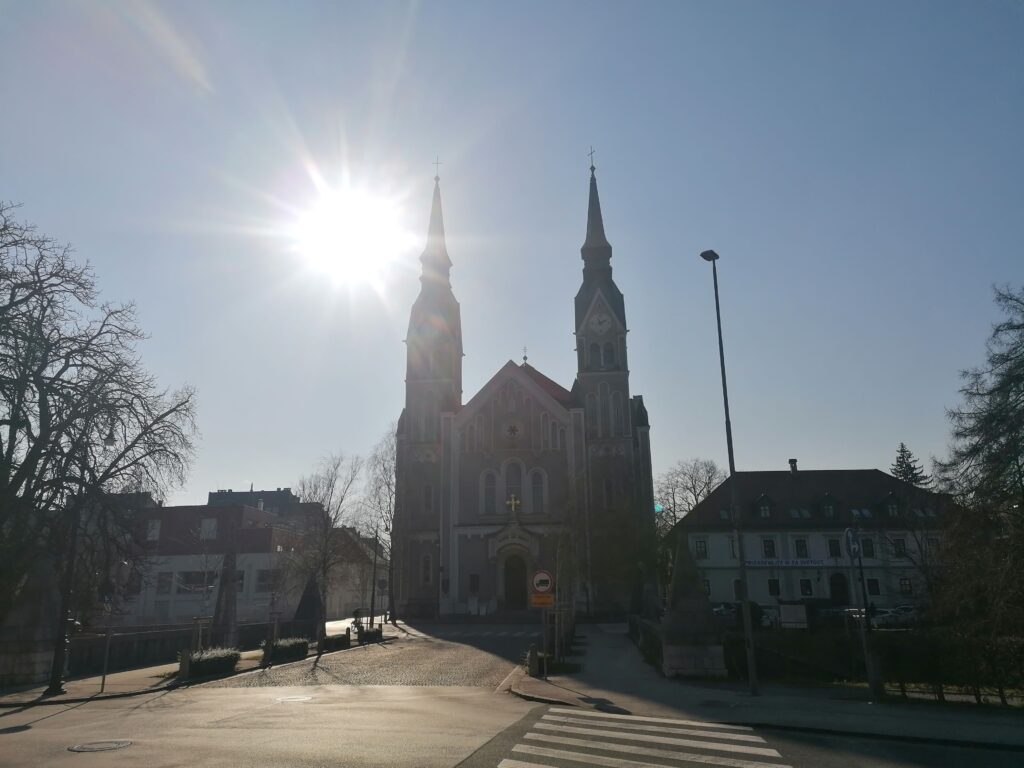
Since the last month has passed under the sign of Prešeren, Tara and I began our ‘miraculous’ visit to Ljubljana at the place where the poet first met his great love. Also with the thought of what he gave up, what he went through and how he suffered, and what he saw and felt, to create such important creations for the slovene nation.
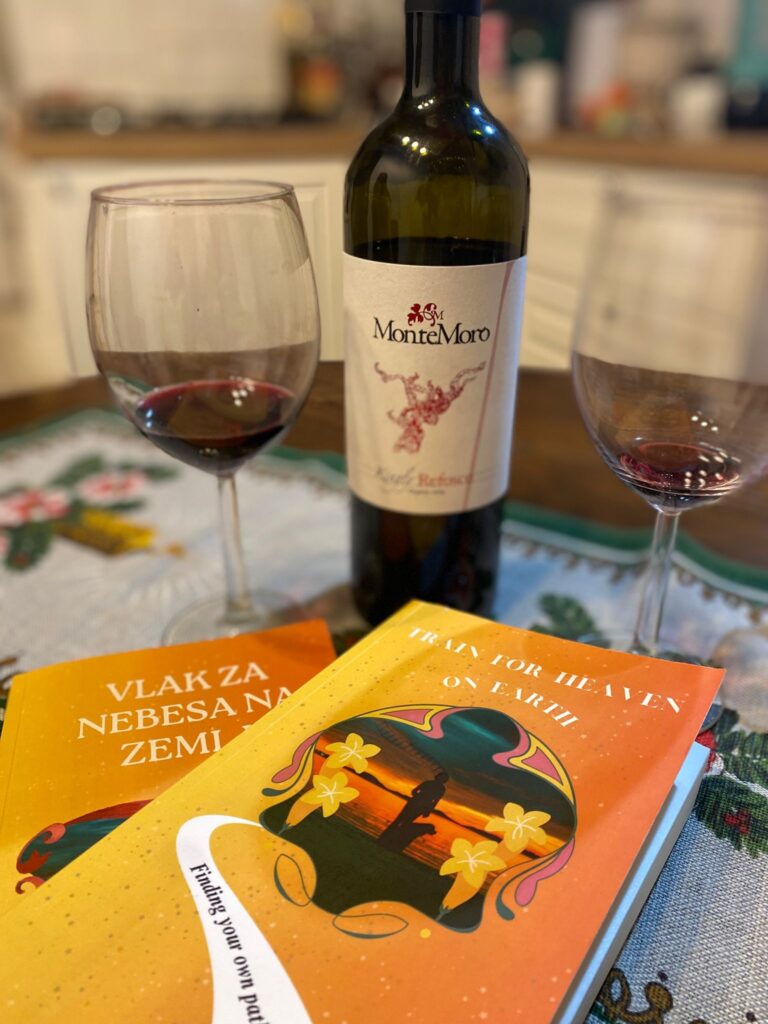
The next stop actually ‘kicked’ me into visiting our capital again after a long time. I took the obligatory copies of my novel Train for Heaven on Earth to the National University Library. It only dawned on me later that the moment was actually truly special. 15 years ago, ‘just’ a dream that came true… But if I’m honest, the journey was neither easy nor short.
We continued our walk to Tromostovje / The Three Bridges, another hologram that reflects the whole. The bridges are placed at a certain angle to each other so that they look like a model of the triple division of Slovenia. “The triangular composition is directed towards Robb’s Fountain, crowned with a high pointed marble vertical. In relation to the horizontal (yin) nature of the Three Bridges, fanned out into six streets, the vertical of Robb’s Fountain is a symbol of the masculine principle (yang). Three men, positioned in a triangle, pour water from jugs from three Carniolan rivers, the Ljubljanica, Sava and Krka.
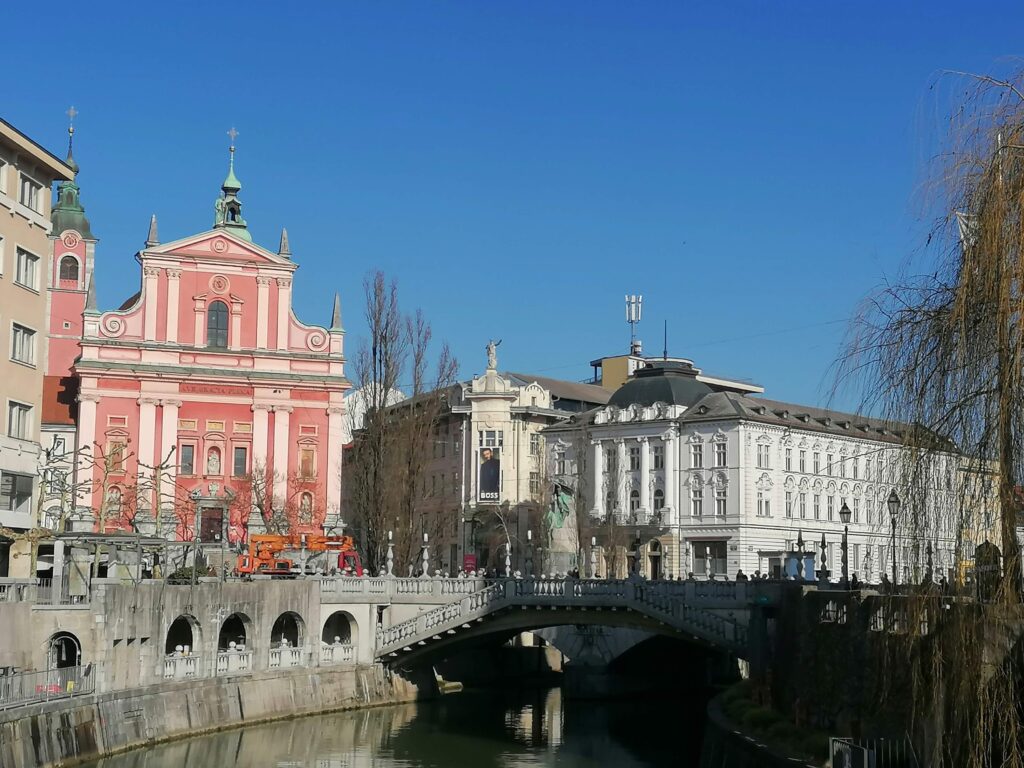
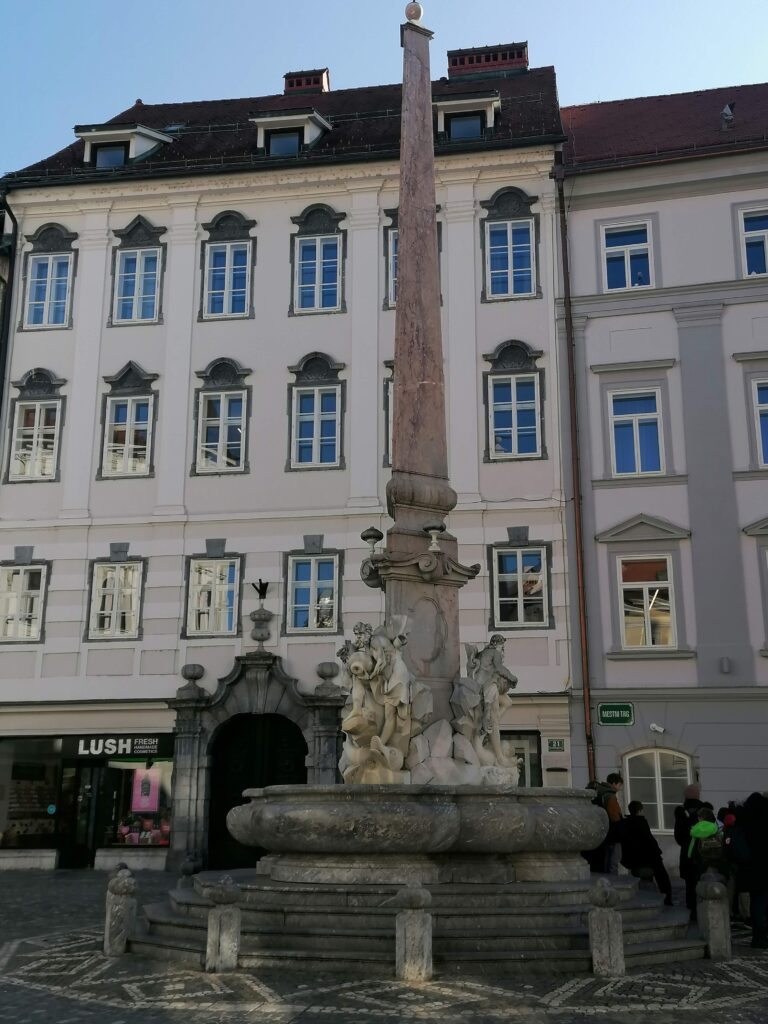
If we connect the trinity of Robb’s Fountain with Plečnik’s Three Bridges, a Star of David pattern is created in the center of Ljubljana, in which the female and male triangles are in harmony and balance. Such a pattern corresponds to the essence of the Goddess of Abundance, in which the female and male principles cooperate.”
On the way to Tivoli and Rožnik, Tara and I walked through the center of Ljubljana to the ‘state-forming place of Slovenia’ – the former nun’s garden.
“The Nun’s Garden, supported by the forces of the Axis of Abundance of Life that surround Ljubljana, would provide the country with the miraculous power of growth and other conditions necessary for the realization of a creative society… Before life’s impulses can be realized as phenomena of the embodied world, they must be arranged into archetypes that enable embodiment. One such archetype is the image of the Garden of Eden – a way of being on Earth, attuned to its essence and the essence of the beings who inhabit the Earth as embodied beings or in the form of sensitive etheric bodies…
The creatures of the nun’s garden in the deep dimensions of space continue to maintain the meticulously drawn picture of Slovenia as a garden of paradise and constantly offer the possibility that it could be realized as an abundance of life, distributed throughout the landscapes of Slovenia. The nun’s garden, transformed into a cold architectural brilliance, prevents the flow of life forces from coming into contact with the prototype of Slovenia as a garden of paradise. The inability to communicate between the two causes the flow to be stopped and clouds of twisted forces to accumulate over the state-forming district, preventing intelligent action, social development, and guiding institutions.”
But all is not lost! The invisible guardians of the nun’s garden have found a way to keep its extraordinary potential alive, although the western part of the former garden is said to be home to a demonic aspect of the space, reflecting everything that the human mind, out of tune with the place, has done here. “In the image of the demon of the given space, it is possible to recognize some of the characteristics of a man alienated from his essence, as this is reflected in the way the nun’s garden has been transformed and how it is used today. I am thinking of a thin, steel-plate-like layer of nothingness that cuts through a person in the area between the solar plexus and the tip of the sternum. A person cut in half is neither grounded nor truly connected to his original form. The cut is so thin that it is usually not even noticeable…
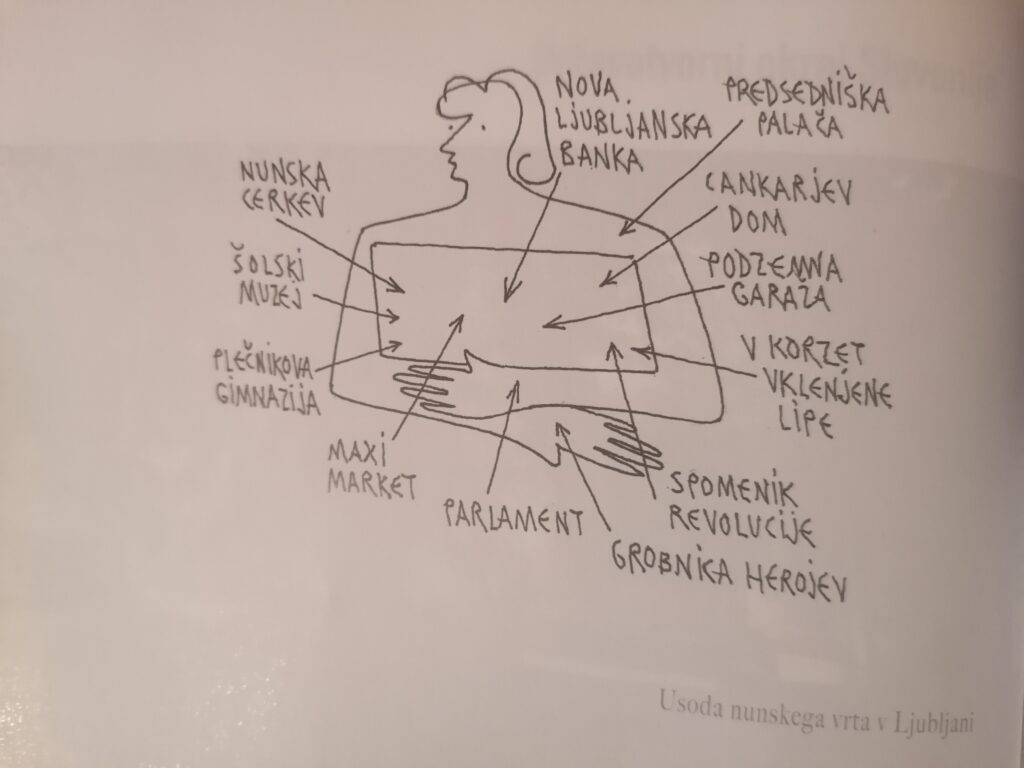
The destroyed and revived nun’s garden could represent the foundation of a comprehensive green Slovenia since it is no coincidence that within its noosphere a state-building district of the native land was created. However, we should not expect a miraculous end to the crisis until we are able to connect the nun’s – paradise – garden and its countless properties with the state-building roles that have unknowingly settled in it in the meantime. We cannot connect the two poles, which currently do not know each other, until we realize the connection, each of us, in our own inner nun’s cape – the prototype of paradise on Earth, which each of us received as a gift from Gaia in the form of the prototype of the Earth’s universe upon our incarnation…”
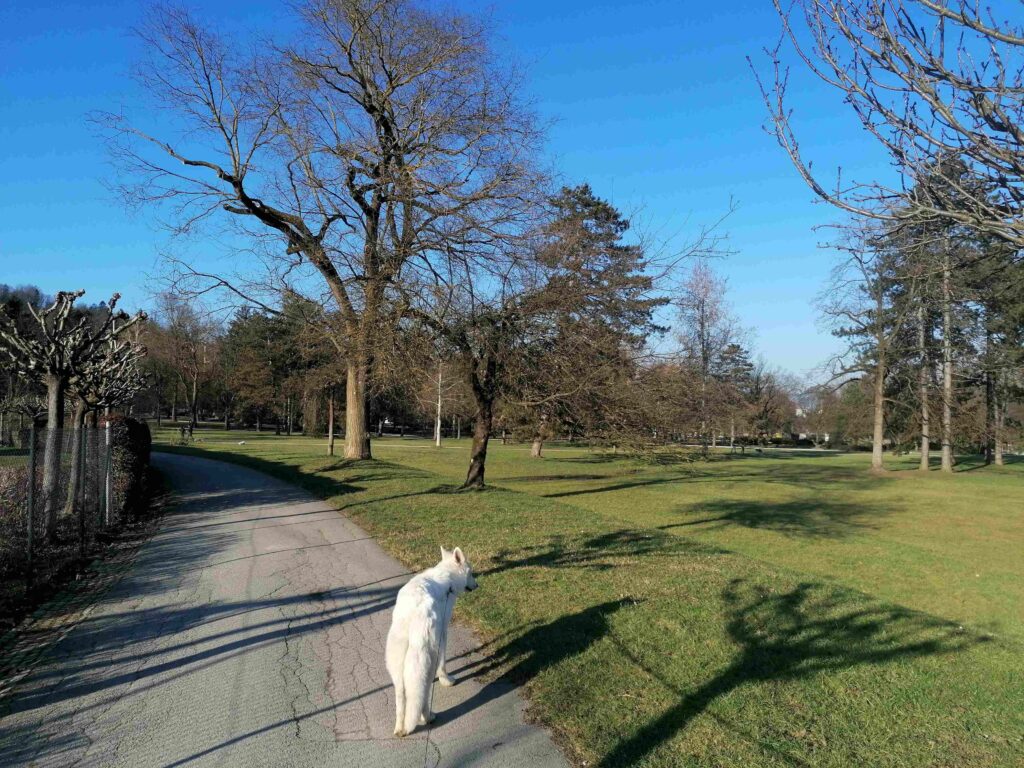
Well, instead of meditating on Republic Square, Tara and I diverted the photographer’s attention, who had previously been focused on photographing the parliament. Perhaps the plate turned at that moment and the Garden of Eden came to life through the wilderness in the middle of the city – in a wolf-like white dog. 🙂
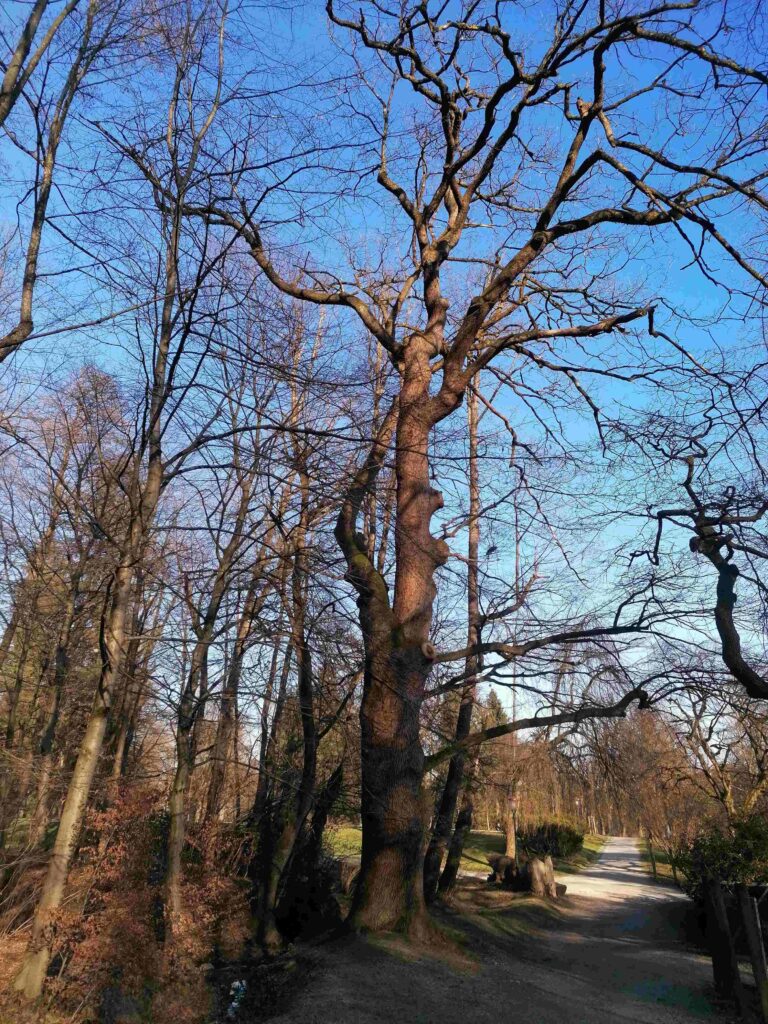
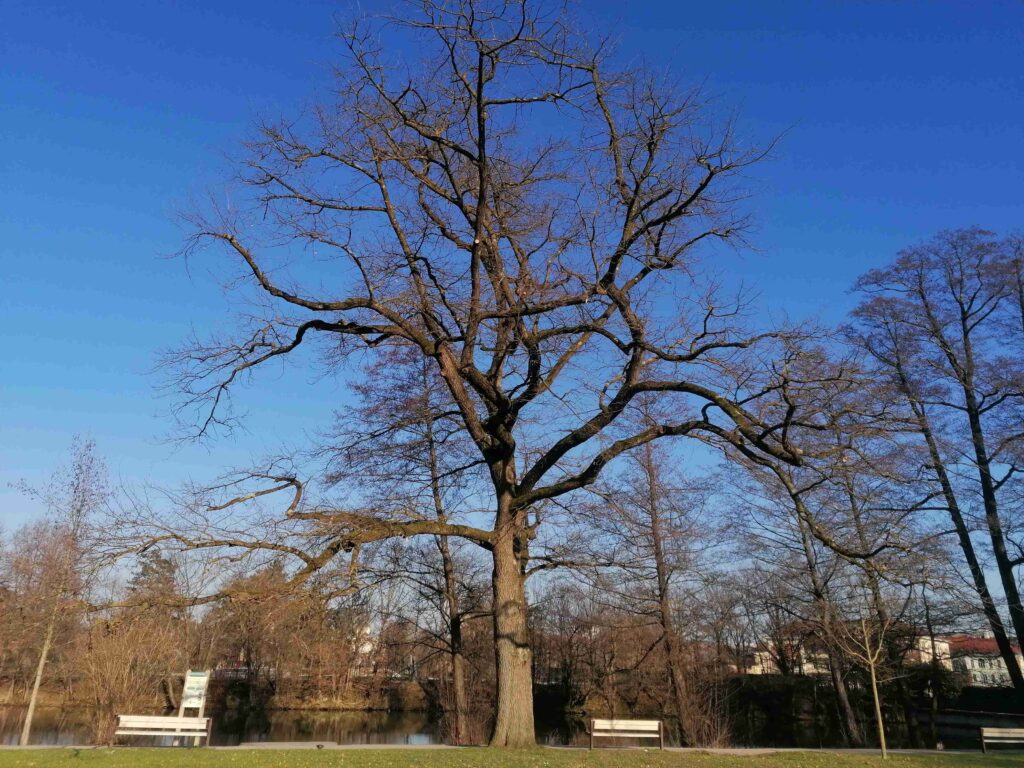
We walked through Tivoli to Rožnik, or Cankarjev vrh. The name Rožnik is associated with the mythical horn, a symbol of the dragon’s power. “Rožnik, together with Šišenski hrib, resembles a toad in shape. Its wide and rounded body is pressed to the ground as if to show its belonging to the element of earth and the processes of embodiment in matter. Before you approach it through Tivoli Park, you come across a gate made up of two ancient oaks that guard access to the dragon. The sanctuary of the dragon Rožnik is opposite Tivoli Castle, right at the foot of the mountain…“
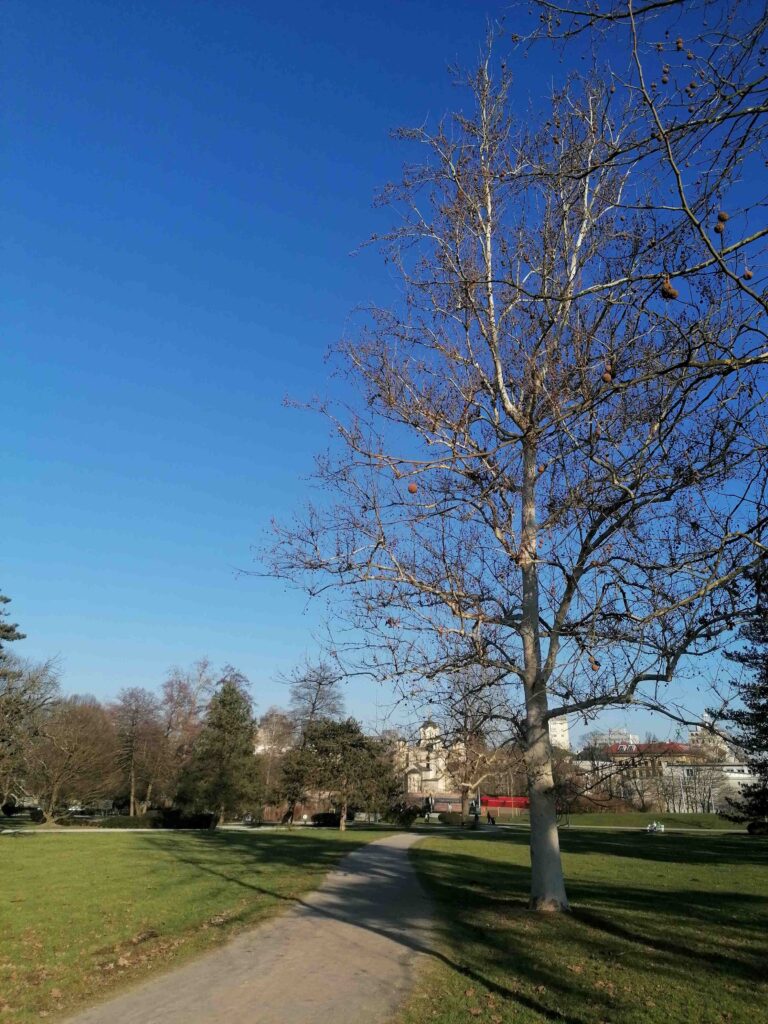
Pogačnik calls dragons creative angels, and we can be grateful that we have such exceptional focal points of the ancient forces of the Earth and the Universe in the capital and its vicinity. I didn’t directly notice the ‘ancient’ oaks that guard access to the dragon, but I did notice a small crowd of very impressive trees, practically on every corner, which I admired and hugged. And I didn’t miss the multitude of springs, which are now forgotten, but in the past also fed the Robb’s well.
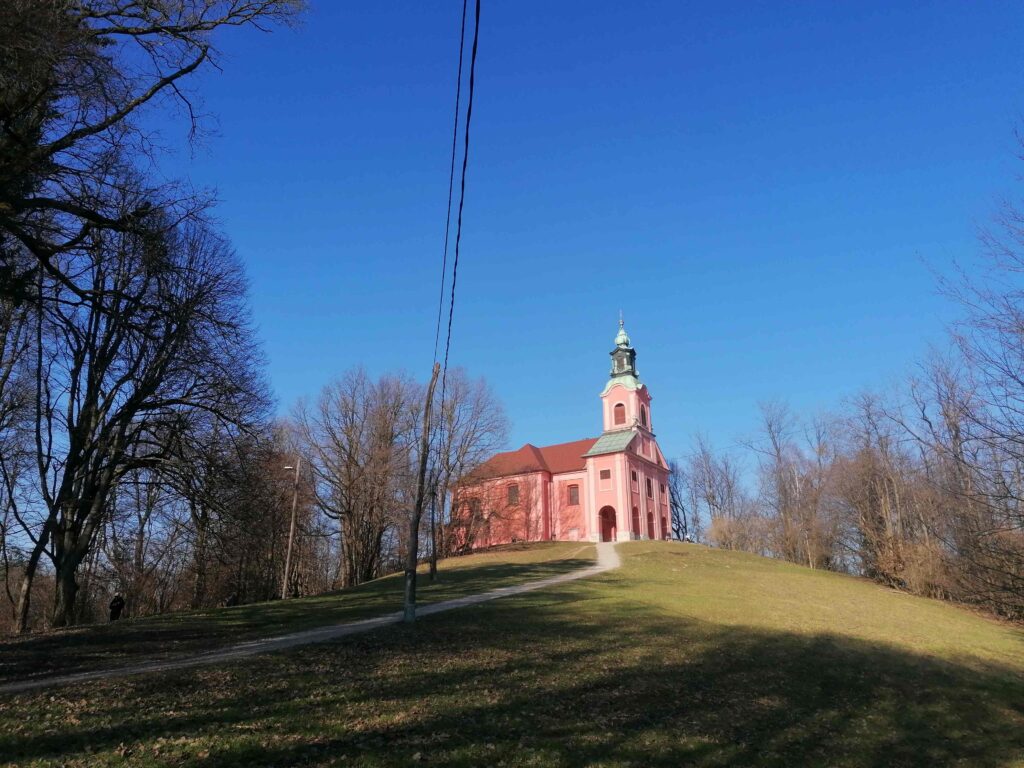
The restaurant Rožnik, located on Cankarjev vrh, was where another great figure of Slovenian literature stayed for 7 years – Ivan Cankar. He licked his wounds there after a devastating 11-year stay in Vienna. He claimed that: he had never lived as happily as here, that he enjoyed solitude, and that it was more useful “for a person to go and pick apples than to read German newspapers in a café”! I agree with him, but Tara and I walked past the restaurant and preferred to rest by the church on the top of the hill before going back – or rather forward (the route turned out to be circular).