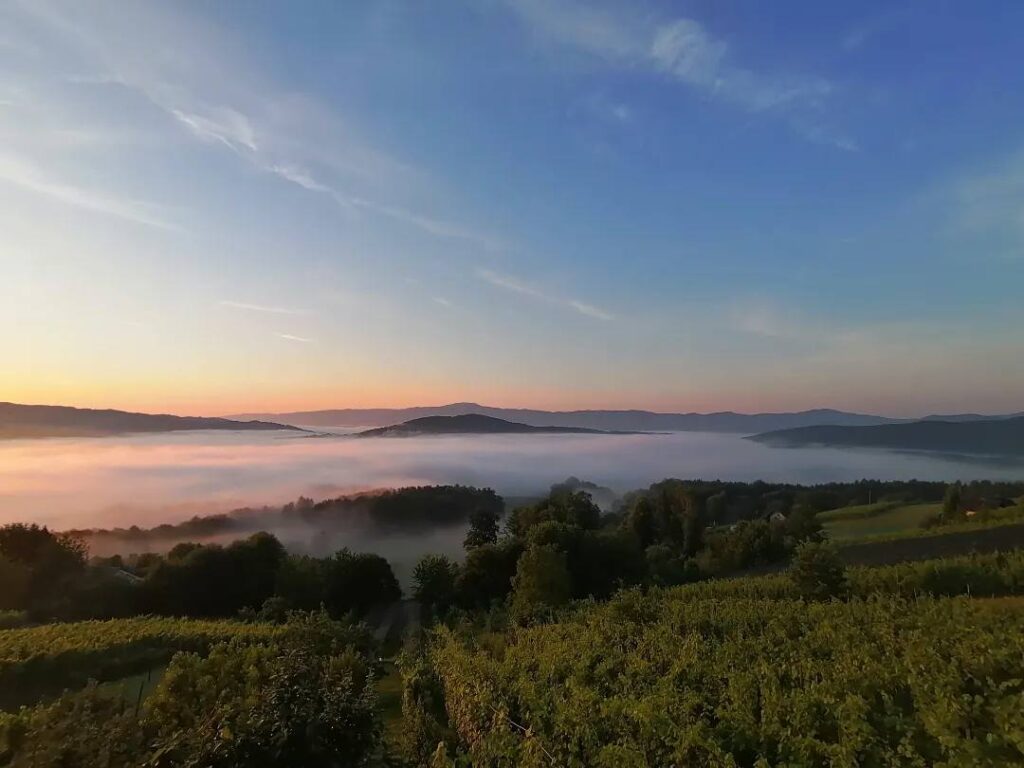
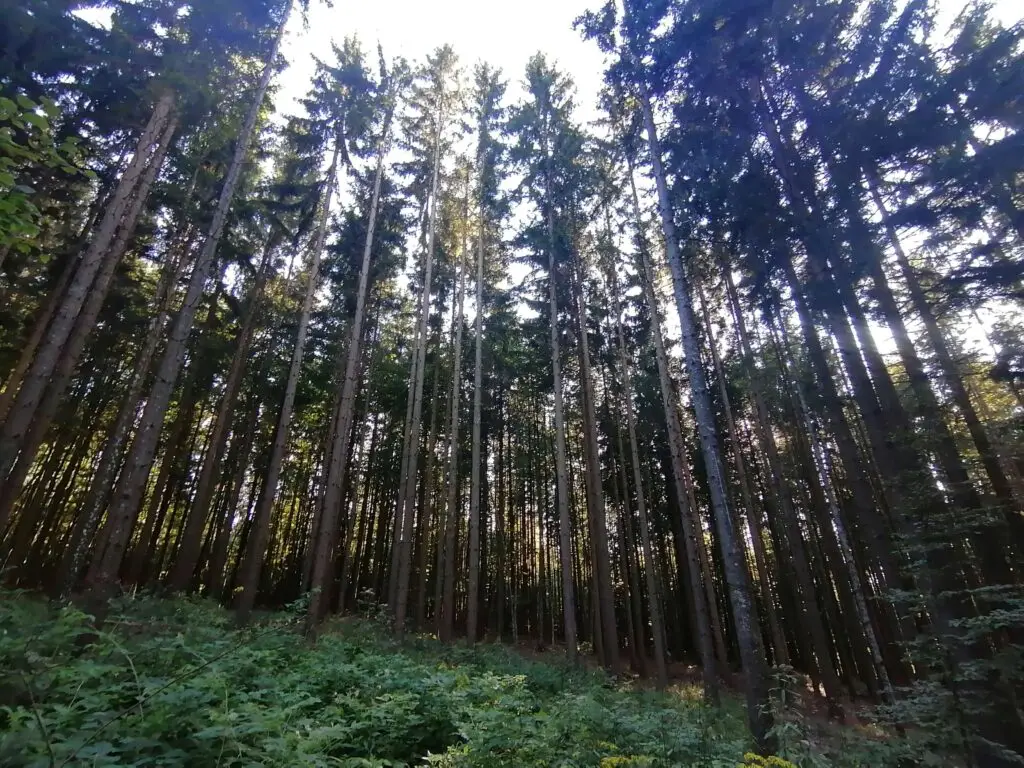
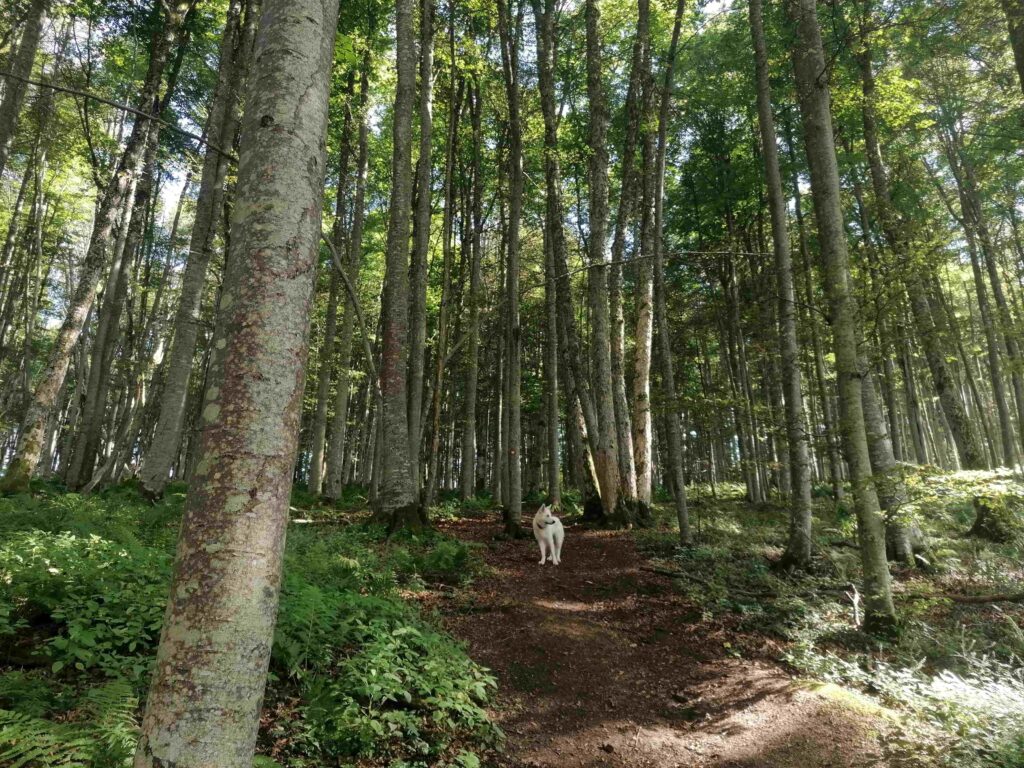
After yesterday’s writing about Dolenjska and today’s planned writing about Gorjanci, in the morning these hills greeted me with this picture as I stepped out of my wooden cottage/weekend home and set off for a morning walk in the forest, accompanied by a dog on the ground and a common buzzard in the sky.

I have a whole bunch of photos with views from the hill above Mirna Peč – a place I will write about in the next post. It amazes me in all seasons, in all parts of the day, in any weather …
The name Gorjanci is said to simply mean ‘a group of mountains’. Marko Pogačnik claims in his book Slovenia Miraculous that people have forgotten their original name, i.e. Kukova gora. Kuk is a variant of the name for fairy mountains, such as Klek.
Janez Trdina wrote in his Fairy Tales and Stories about Gorjanci that Kukova gora, the central, most powerful part of Gorjanci, is hollow and that a lot of water is hidden in it. “Although it was a fairy tale, it may not be far from the truth. The research to date fully confirms Trdina’s fairy tales…” say the researchers of the Kostanjevica cave in an article in a newspaper Slovene news.
Under the Gorjanci, a story is also said to have been preserved, which relates to King Matjaž and his army, who sleep under the Carinthian mountain Peca. The memory of him is not only found in Carinthia but throughout the country. My aspiring Slovenian language students have also translated the story into Serbian, Ukrainian, Russian, Albanian, English, and Spanish.
According to Pogačnik, King Matjaž and his army are said to have arrived at a pure spring, surrounded by a sacred grove, in which lived fairies, the guardians of the spring. Matjaž ordered the grove to be cut down, despite the fairies’ loud warnings. The unfortunate fairies pushed the nearby hills towards each other and buried the king and his army under them. They hollowed out the mountain that was created in the process, giving the king and his ‘army’ a comfortable place to sleep for centuries.
“The story consoles the people by claiming that the fairy world, as a civilization that is the guardian of the Earth, has not disappeared forever. In the language of the fairy tale, it sleeps during the dominance of logical reason and monotheistic views in the ‘subconscious’ of space (the underworld), until the day it returns to the surface of the planet and brings with it the inspiration of lasting peace and coexistence. The possibility of re-establishing the connection and coexistence with the sister evolution of fairy creatures, of course, depends on when man will be able to return to his original identity. In modern times, the latter is covered with layers of intellectually limited ideas about who we are as human beings. Thus covered with superficial gears, we have naturally forgotten what the meaning of our existence on Earth and cooperation with the beings of the Earth’s universe is. Our true identity, together with Matjaž’s ‘army’, has been sleeping for the last three millennia.”
I tried to reach Peca and went to the cave of King Matjaž, by myself two years ago, but I started from the ‘wrong’, too distant, place and I ran out of time for the final destination. Little Tara, who was only a few weeks old, was waiting for us to get to know each other on nearby Graška gora. The right time to ‘conquer’ the mountain together had not yet arrived, we first climbed Gorjanci.
Pogačnik was pushed by the Goddess of Kuk’s mountain to the third floor below the Earth, to a world beyond space and time. Not emptiness, but the consciousness of Gaia, who sees all sides of the Earth’s universe at once, and the author equates her eyes with the house of dragons, the home of Gaia’s creative angels. “When I tune into the role of the third underworld of ‘Kukova Gora’ in the system of the elemental heart of Europe, I see that a stream of silver, spark-like impulses emanate from these mighty depths. I have the feeling that they represent an electrical impulse that rhythmically sets the elemental heart of Europe in motion, similar to how the recently discovered pulser drives the rhythm of the heart muscle by triggering an electric spark. I could say that in this third world of the underworld, the spark of life is born.
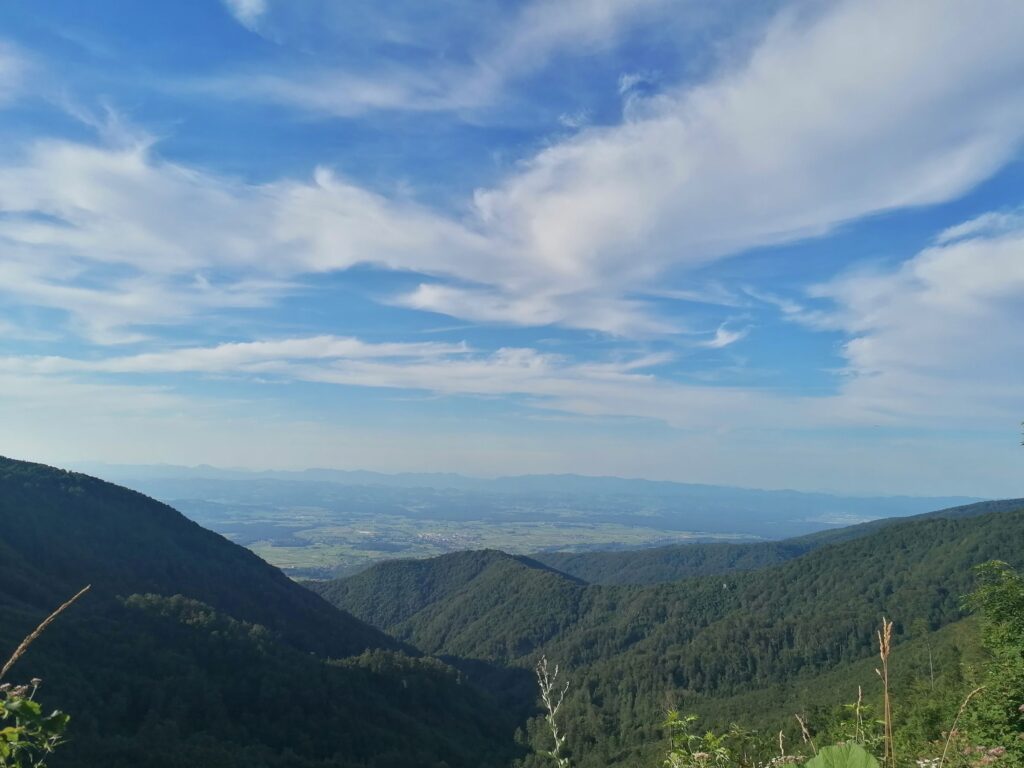
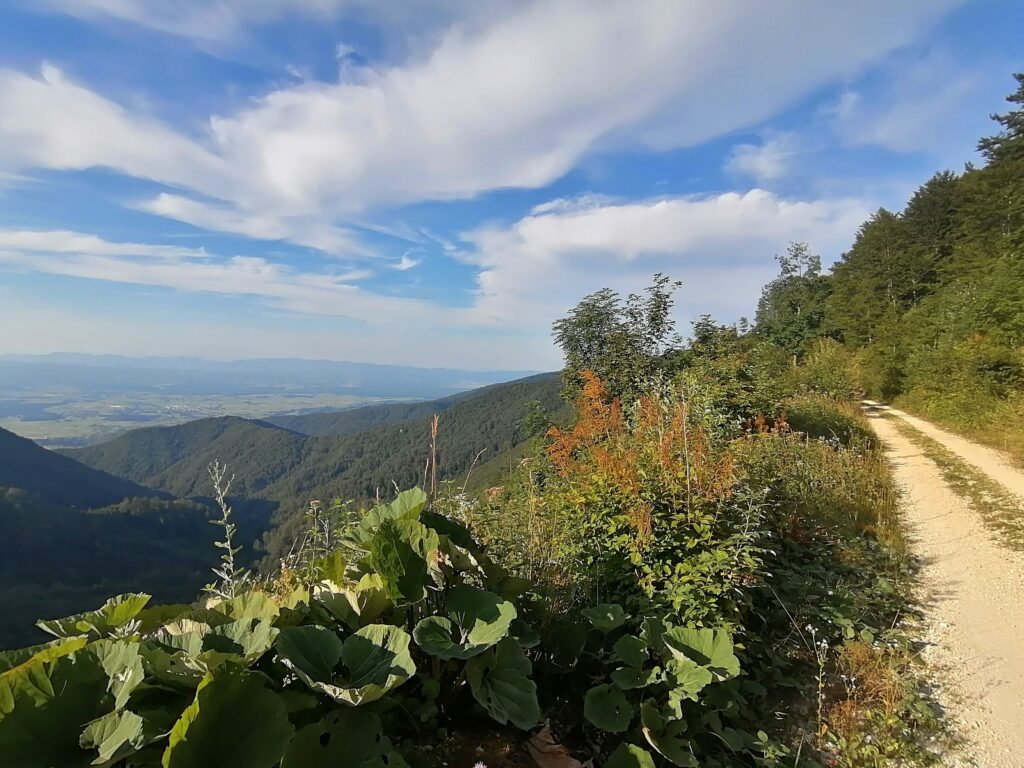
In this sense, I perceive Gorjanci as a multidimensional portal, functioning in such a way that the ideas that left a record in the water of Plitvice can make contact with those dimensions of life that allow them to be embodied. The various focuses of elemental beings, spreaded out along the northern slopes of the Gorjanci Mountains, act like midwives during childbirth…“
‘Spark of Life’ could explain the strange event when Tara and I returned from our trip to Trdinov vrh and wandered through one of the rare remnants of primeval forest on Slovenian soil. When I stepped through the door of the cottage, the TV turned on by itself. I immediately looked for the remote control, but it was lying untouched on the nightstand, with the buttons facing up. So, I don’t know who turned on the TV, or why it turned on by itself… 🙂
Perhaps one of the elemental beings who participate in the process of preparing for the embodiment of life came with us? And is it also participating in this writing? 🙂
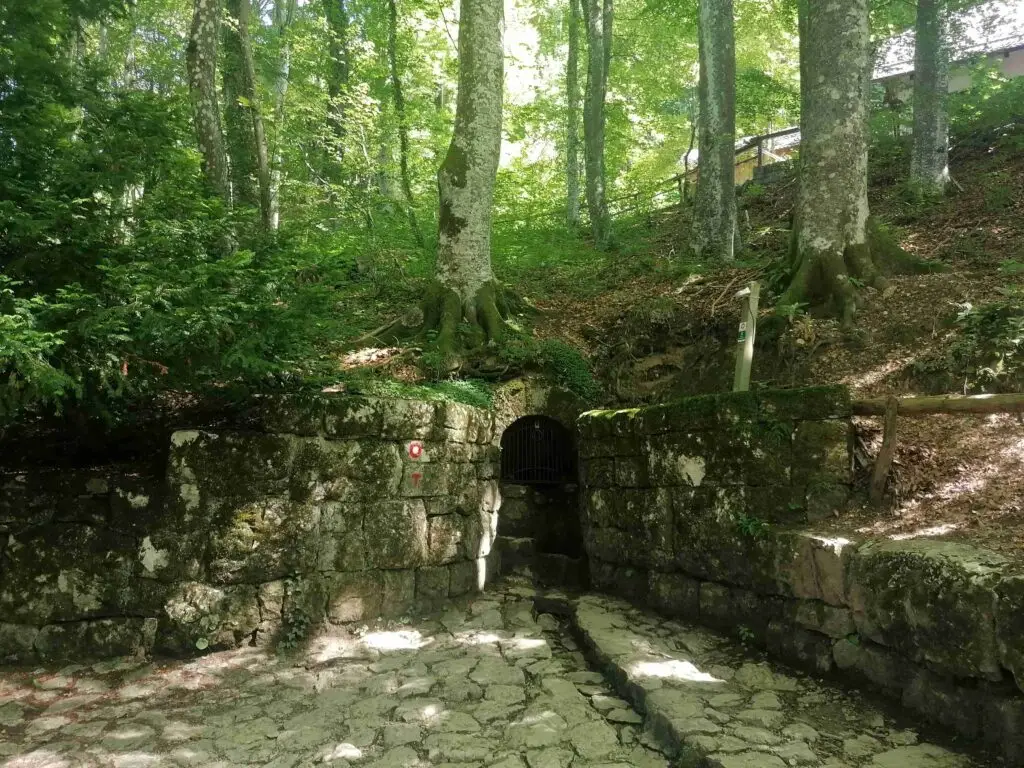
The Gospodična spring, where we began our path towards Trdinov vrh, is famous for the healing properties of its water and is credited with the ability to renew the human being. But these powers do not work without the cooperation of fairy creatures, and the memory of it has been lost. “The memory of the true source of regeneration is preserved by a megalithic rock, erected upright about a hundred steps above the spring. It contains an ancient agreement on the rules of co-creation between human and fairy creatures.“
We also walked around Miklavž, which Pogačnik experiences as the element of earth, but this time we left out Gradec nad Mihovim, the central sanctuary of Kukova gora with the properties of the element of air, as well as Javorovica nad Pleterjem, associated with the elemental beings of fire.
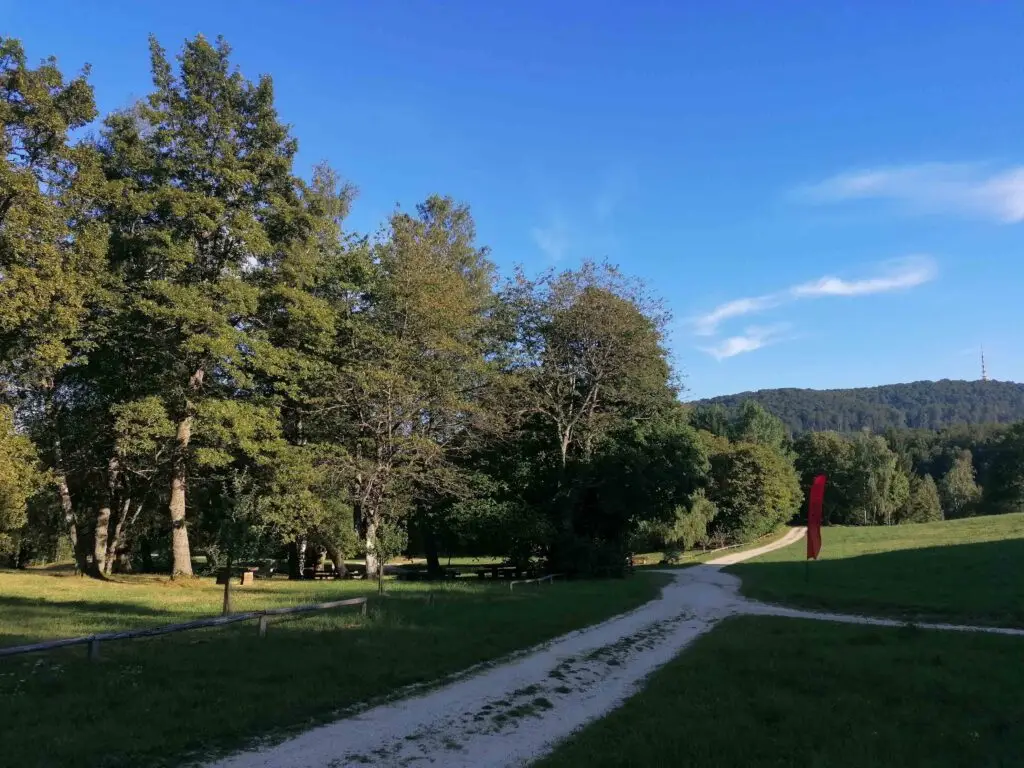
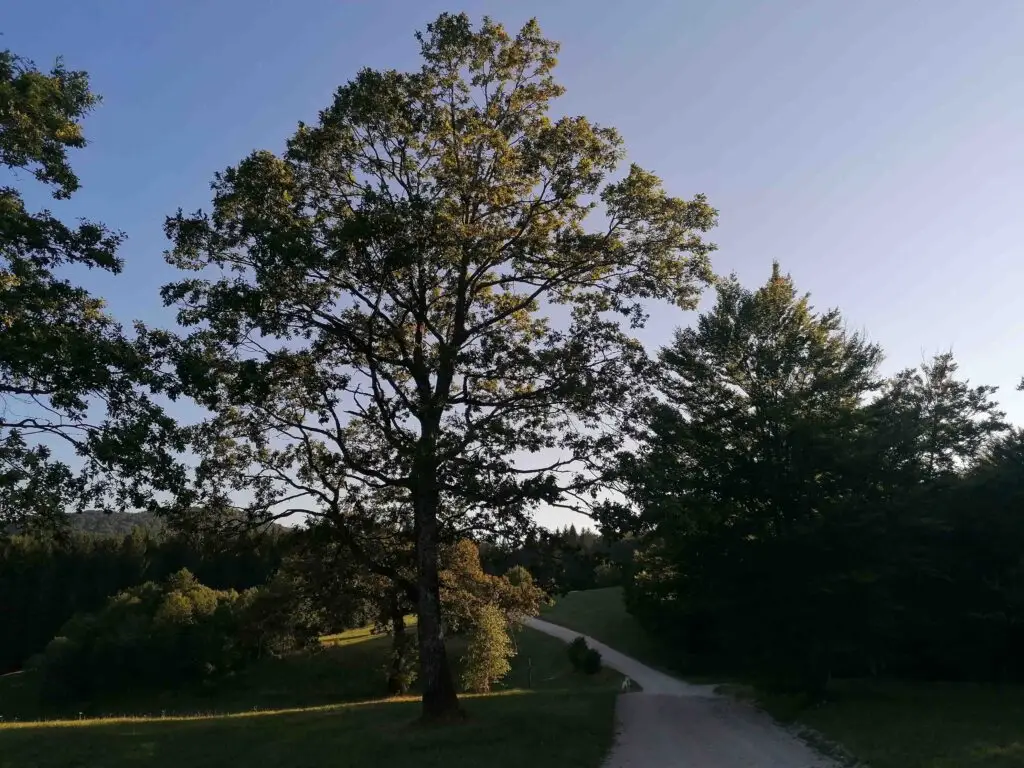
Quite a bit of effort had to be put into the climb (marked as an easy path on the internet, suitable for children, but there wasn’t much ‘easy’ walking on it), lasting an hour and a half. I apparently missed a few signposts and only got back on the ‘right’ path with the help of the navigation on my phone. ‘Wandering’ through the forest can be omitted – a well-maintained macadam path also leads to the top of the mountain.
Trdinov vrh or Holy Gera in Croatian is the highest peak of the Gorjanci Mountains (Žumberak or Žumberačka gora in Croatian) with its 1178 meters. The border between Slovenia and Croatia runs along the hills; the concrete observation tower and the Church of St. Elias are located on the Croatian side, while the Church of St. Jera, a telecommunications tower, and the barracks of the Slovenian army are on the Slovenian side.
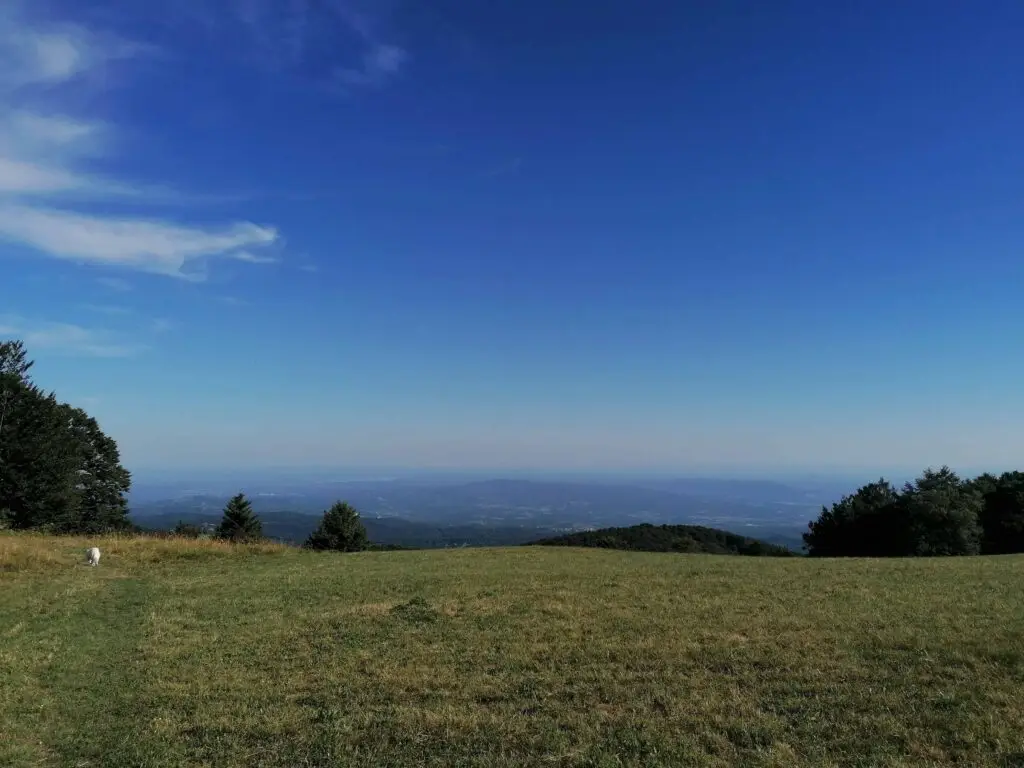
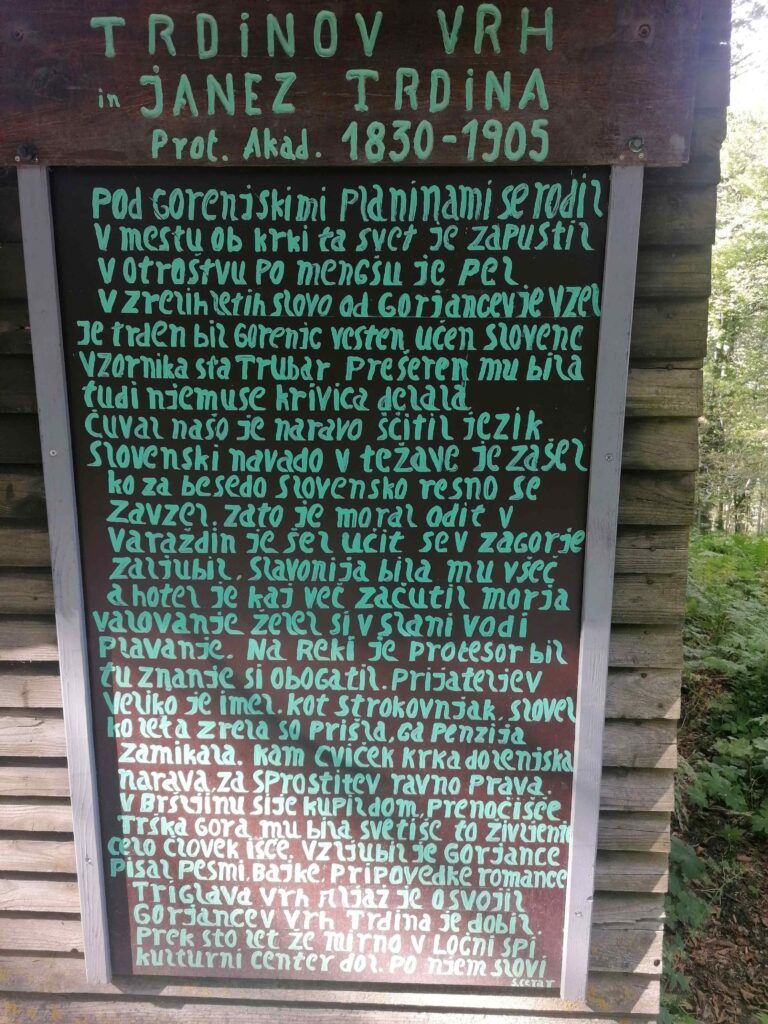
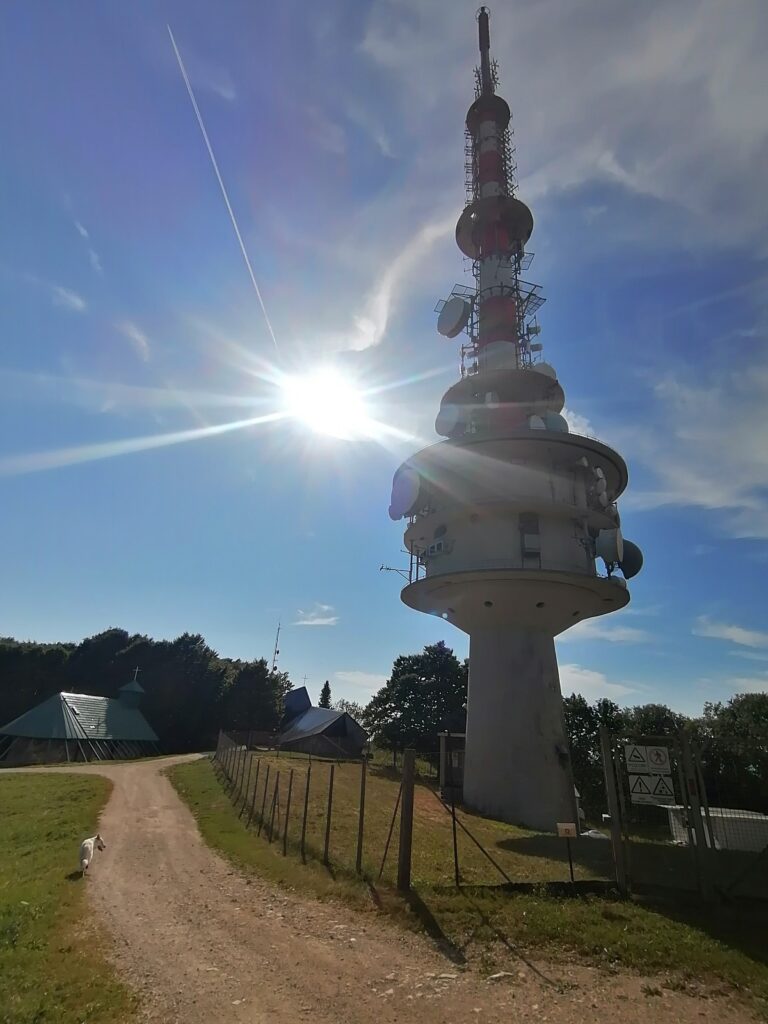
But if I go back to the broader significance of the Gorjanci, rather than merely being the source of the dispute between Slovenia and Croatia over the ownership of their peak, I only now realize how important a role it plays for the whole of Europe and the Earth. “Together, the Gorjanci and Millstätter See, form a wide ring that revolves around the Blue Gaia system, stretched between Goričko and Venice. It allows the Blue Gaia system to activate and begin to function again as a creative tool of Gaia/Nikrmana in renewing all the different dimensions of the Earth’s universe. In the south, the ring connects to the womb of the Balkans with the help of Plitvice, and in the north with the help of Grossglockner to the heartland of Central Europe …“